


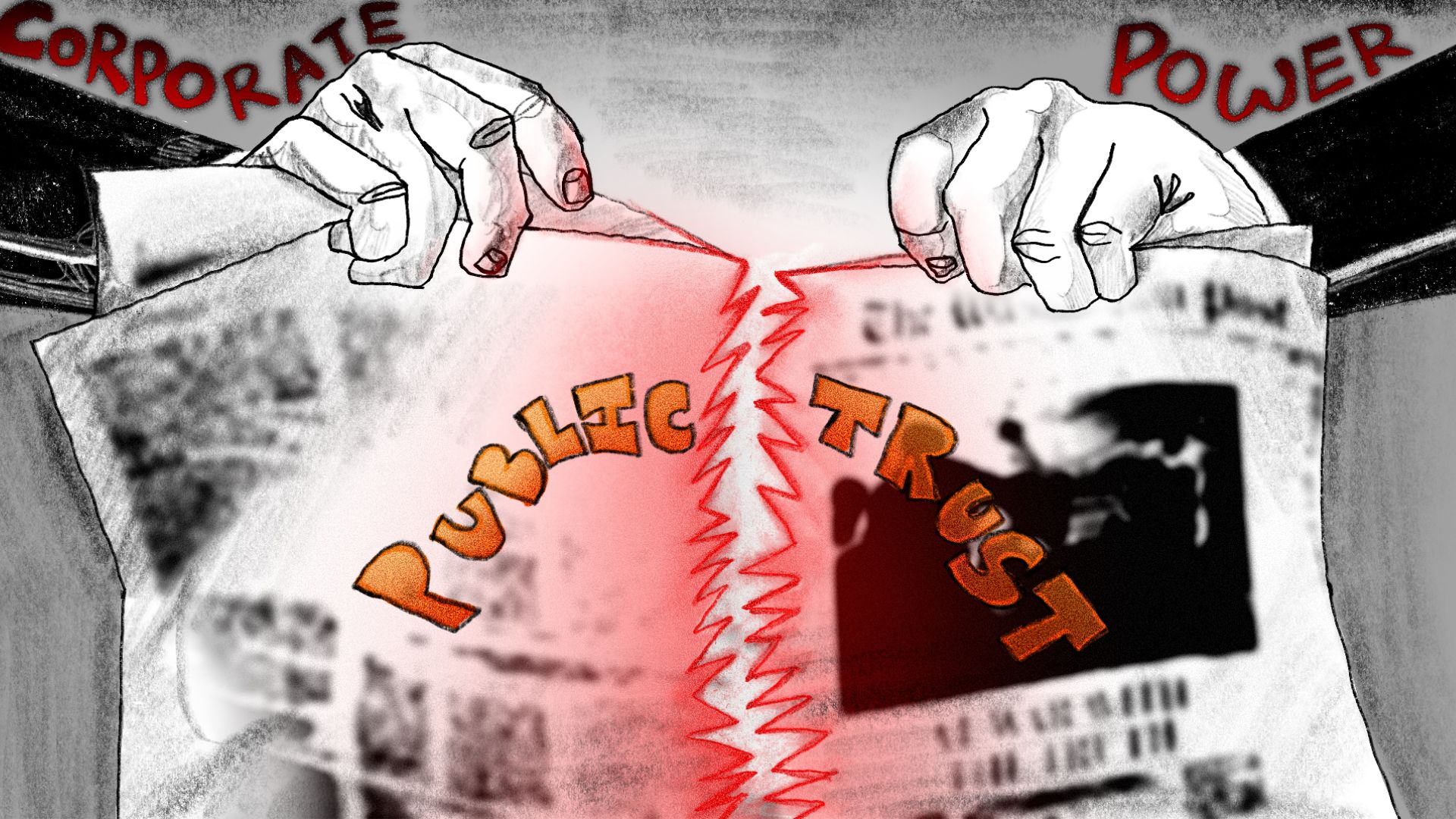
When Jeff Bezos, a global business billionaire, took over The Washington Post in 2013, many thought the publication had reached its end.
But Bezos surprisingly led The Post toward expansion and technical improvements shortly after. However, his intentions have shifted since the last presidential election.
Earlier this month, the paper reduced its staff, laying off more than 30% of its staff, getting rid of the sports and books sections, its daily Post Reports podcast and foreign bureaus, among other things.
“If anything, today is about positioning ourselves to become more essential to people’s lives in what is becoming a more crowded, competitive and complicated media landscape,” said The Post’s Executive Editor Matt Murray to The New York Times.
Some journalists resigned and joined protesters in front of the Washington D.C. headquarters, rallying against the decision.
For a while now, The Post has seen major shrinkage in their audience and undergone financial loss, which is a bigger issue that many news organizations across the nation are experiencing.
News organizations rely heavily on advertising revenue to sustain their product and without proper funding, they are forced to cut staff.
When Bezos intervened in the 2024 presidential election to block The Post from endorsing Kamala Harris, he contributed to the public’s doubt of whether the paper was being biased.
It cost the publication more than 200,000 subscribers.
Since editorial endorsements are opinion pieces, blocking one raises major concerns about the impact owners can have.
If someone in charge can intervene in editorial decisions, what prevents their political inclinations from directing the course of journalism for personal gain?
That sparked concern. Some say fewer investigative pieces are being made and senior reporters are being removed. Now the recent layoffs are adding more doubt.
Former Post Editor Marty Baron stated “The Washington Post‘s ambitions will be sharply diminished, its talented and brave staff will be further depleted, and the public will be denied the ground-level, fact-based reporting in our communities and around the world that is needed more than ever.”
When reporters disappear, so do stories that deserve to be heard.
Credibility is earned through transparency and these changes wound the organization’s reputation.
Will this be a defining moment in the paper’s legacy?