


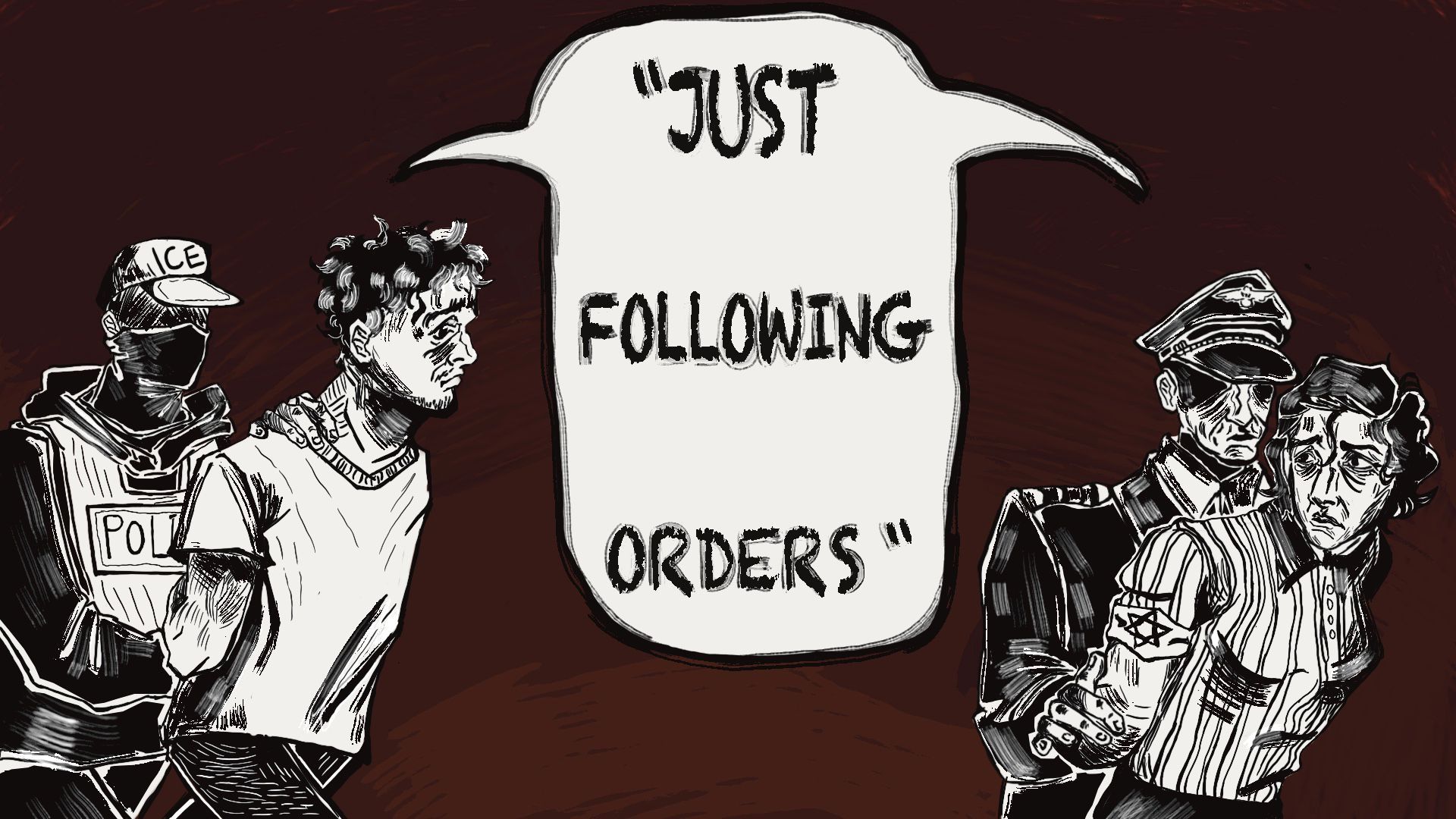
In his 2024 presidential campaign, President Donald J. Trump pledged to secure the border and purge American cities of ‘illegal criminals’.
The administration is delivering on that promise—just not in the way most Americans expected.
Working under the leadership of the United States Department of Homeland Security, Immigration and Customs Enforcement has unleashed massive raids, mainly enabled by $85 billion in federal funding.
While the executive branch claims to be targeting “the worst of the worst,” data shows that more than a third of the immigrants being detained do not have a criminal record.
Many have been violently arrested without probable cause, deprived of legal representation, held unjustly in detention centers and some have been deported back to their home countries.
When asked about the legality behind ICE procedures, immigration officers and government officials have responded by saying they are “just doing their job.”
What’s more concerning is that administrative officials are granting immigration authorities blanket immunity for their actions while on duty.
“You have immunity to perform your duties, and no one—no city official, no state official, no illegal alien, no leftist agitator or domestic insurrectionist—can prevent you from fulfilling your legal obligations and duties. The Department of Justice has made clear that if officials cross that line… then they will face justice,” said Stephen Miller, a White House advisor who is considered the main architect of Trump’s immigration policies.
Legal experts argue this is unequivocally false. Federal agents can be persecuted for violating state law, despite being protected by the Supremacy Clause.
Contemplating this notion as a possibility challenges multiple constitutional rights including due process of law and the First Amendment.
ICE, long considered one of the most politicized federal agencies, used to be more subtle about their business before being rebranded by the Trump administration. Officers were trained to understand immigration law, to be aware of their limitations and avoid the use of weapons at all costs.
The tactics being used today prioritize advancing a political agenda, which sends a message to agents and officers that is quite the opposite.
Authorities are masking their identity, tear gassing protestors, racially profiling individuals and stepping into locations that used to be off-limits for immigration enforcement.
Federal officers and agents are not deescalating situations and as a result, violence has increased.
Public outrage sparked in Minneapolis when Renee Good and Alex Pretti, both U.S. citizens, were fatally shot by federal agents during Operation Metro Surge—the largest immigration enforcement effort so far.
The Department of Homeland Security has condemned sanctuary cities like Minneapolis for allegedly promoting the assault of ICE officers and labeled individuals like Good and Pretti as “domestic terrorists” for obstructing the work of law enforcement.
A recent New York Times reports that the government is utilizing major tech companies like Meta and Google to identify citizens who are publicly critical of ICE.
And despite the demands of state officials for a federal investigation of the Minnesota killings, the administration has shown no intention to do so.
If the Department of Justice continues to neglect these cases, trust in the government will continue to erode.