

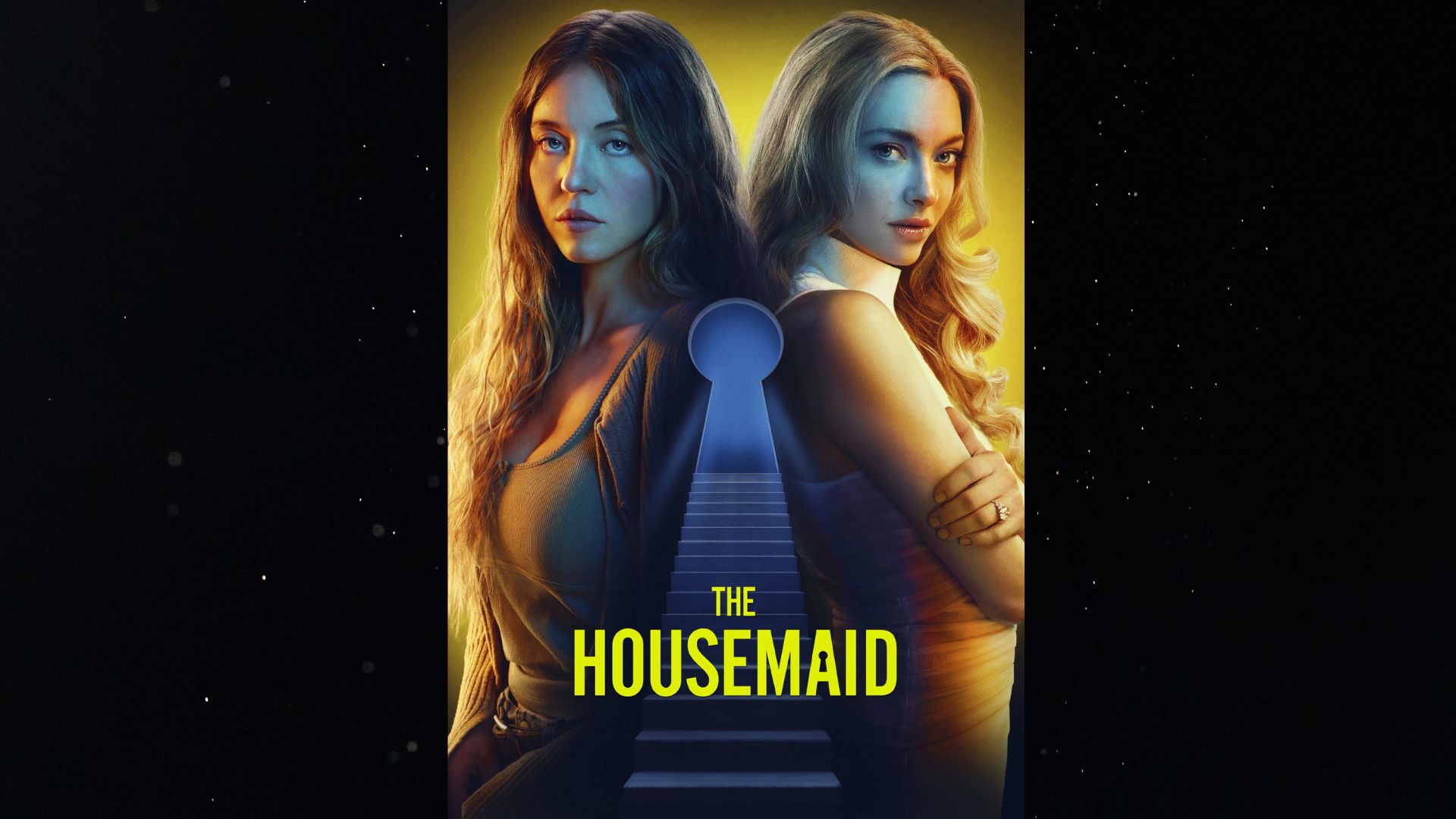
The film adaptation of the bestselling novel, The Housemaid, directed by Paul Feig and starring Amanda Seyfried and Sydney Sweeney, was released in theaters on Dec. 19.
Based on the 2022 psychological thriller by author Freida McFadden, the film follows Millie, played by Sweeney, who struggles with a traumatizing past and rebuilding her life.
Just when things seem hopeless, the friendly Nina Winchester, played by Seyfried, offers her work as a housemaid for her family, which consists of her husband Andrew and daughter Cecilia.
Though the job appears to be a fresh start for Millie, the promising new beginning soon turns into a disturbing nightmare.
Nina’s elegant housewife facade soon drops and her erratic and unpredictable mood swings are directed personally at Millie.
Adding to the oddity of the house is the eerie and emotional distance Cecilia creates, adding more tension that escalates everyday.
Nothing is ever as it seems in this story, with Millie’s arrival to the Winchester house leading to psychological torment and a desperate fight to survive.
The film adaptation provides better clarification of the story.
Although the movie follows McFadden’s plot faithfully, the change in Nina’s personality was one that improved the drive of the plot.
With Seyfried’s remarkable performance, Nina’s cruelty is hinted to stem from something deeper, adding nuance to the character.
In the novel, the depiction of the complex housewife feels almost caricatured and difficult to understand, leaving readers to question the purpose of her instability.
Even changes in supporting characters such as Cecilia’s, affects the overall plot positively.
In the novel, the quiet child’s existence is mainly to provide a reason for why Nina has not left her marriage.
The film however, uses Cecilia to represent the internal consequences that are derived from growing up in an abusive environment and how children reproduce the emotional violence they are witnesses to at home.
One of the most engaging decisions the movie made was the inclusion of a final conversation between Nina and Andrew.
This interaction conveys the end of the characters’ marriage and breaks the cycle of abuse, an element that the novel chose to keep ambiguous.
Additionally, Feig’s inclusion of scenes that are only indirectly described in the book builds greater suspense on screen that feel shocking and even uncomfortable.
Unexpected twists through the story’s reorganization allows the movie to surprise even those who have already read the novel.
While its commercial success is clear – with more than three million copies sold – the novel could have benefitted from the format the film followed, to get the story across better.
An adaptation’s purpose is not only to translate a story onto the screen but to improve the pacing and structure to create a different immersion into the narrative.
Readers of the novel prior to the adaptation and first-time viewers of the story will find the unsettling realization that the truth can be darker than what is expected.
The Housemaid (2025), finds a creative balance between respecting the essence of McFadden’s story while transforming it into an engaging story for viewers that finds new ways to surprise audiences.