

During a recent Thursday afternoon, my family had their monthly gathering at a local cafe.
Everyone present—my parents, uncle, aunt and grandmother—were born and raised in Cuba, including myself. Some crossed the border, others arrived in a raft and some spent years hopping countries before coming to the United States.
Their stories have always drawn my curiosity, but because they rather not talk about certain parts of their past, it has remained a mystery to me.
That is, until our most recent meeting. This is what I learned about my family.
When the Soviet Union dissolved in the 1990s, an economic depression decimated Cuba—the “Special Period” as then Cuban President Fidel Castro called it.
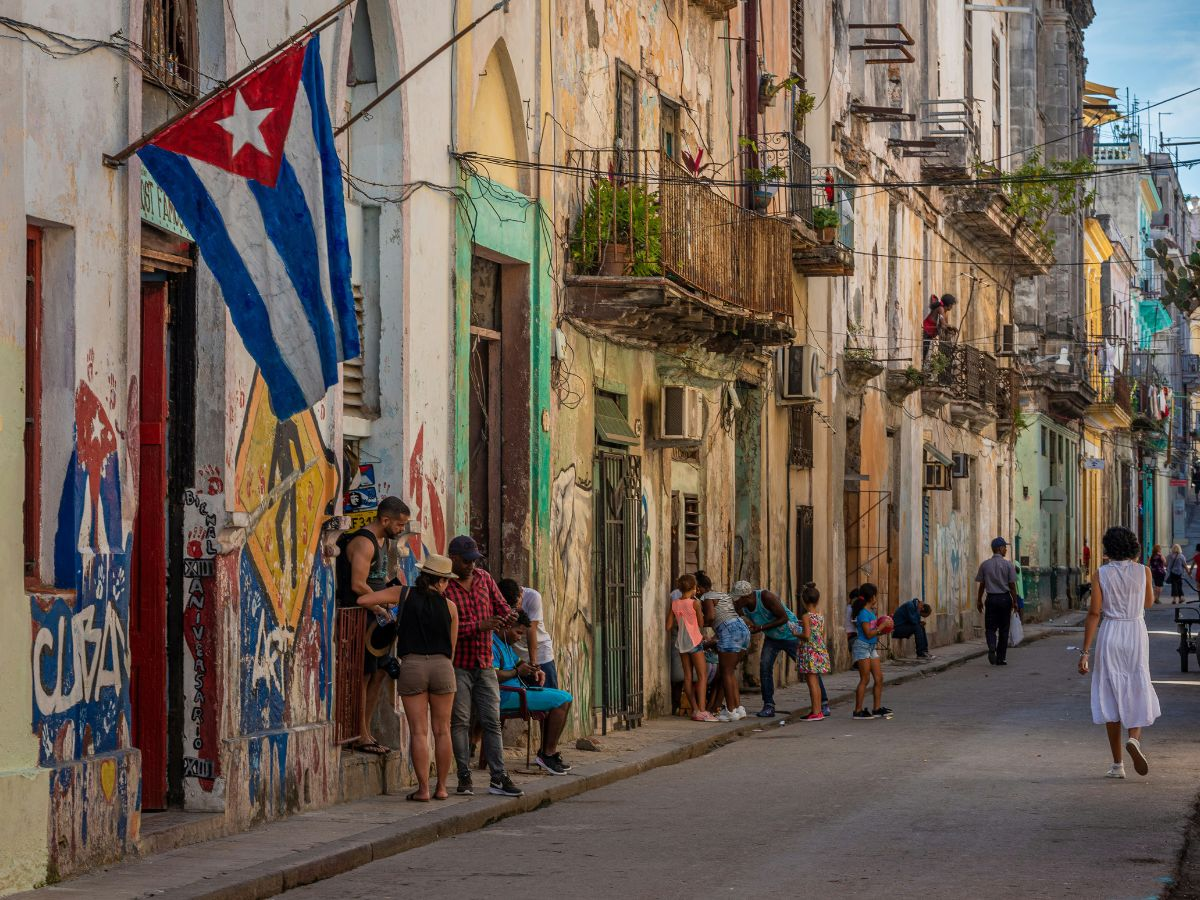
At the time, my parents lived in a small apartment in one of the worst areas in La Habana.
People had little to eat, no electricity or medicine. They moved around the city on a Russian bicycle and my father, an artist to the core, came up with inventive ways to make a living, as all Cubans do to this day.
Amidst the chaos, they witnessed how desperation turned the streets of La Habana into the ultimate destination for sex tourism.
Prostitution became a profitable form of privatized business, a lifestyle, a method to sustain families, a passage out of poverty.
It opened the door to an underground market for other services such as transportation, food and apartment rentals.
That was seen as something very normal. Today, that remains the reality, even worse than in the 1990s.
The economic crisis, fueled by the rising devaluation of the Cuban pesos, is making everyday goods almost entirely unaffordable. The average salary is $4,000 Cuban pesos. Meanwhile, $1 USD is equivalent to about $580—that figure fluctuates on a daily basis.
Circumstances have worsened after the United States cut the oil supply shipments from Venezuela and signed an executive order that applies tariffs on foreign countries that “sell or provide” oil to Cuba—a tool to pressure the Cuban government into compliance.
That pressure has widely cut off Cuba all around, but will that be enough to finally break the regime?
For the first time since Barack Obama’s administration, U.S. and Cuban officials met in Cuba to negotiate in April.
It’s a significant step toward change, but it remains to be seen if it’s the change that is needed.
Cuban leaders, like President Miguel Diaz-Canel and the Castro family, are reluctant to cede power.
Talk of U.S. intervention is also in the air. However, wiping out the current regime without a strong opposition will only deepen the crisis.
The truth is that this 67-year-old debate has not changed over time, it has only exacerbated the inhumane living conditions that exist in Cuba.
Without oil, the island has 50-hour-long blackouts, piles of garbage fill the streets and seeing a bus pass by is considered a miracle.
All citizens can do is endure the circumstances, they rely on the black market, bartering and stealing to make a living.
If you lived in deteriorating conditions with children or elderly parents who rely on you and a job that barely gets you to the end of the month, what would you do?
Would you do what is right or what you need to do in order to survive?