


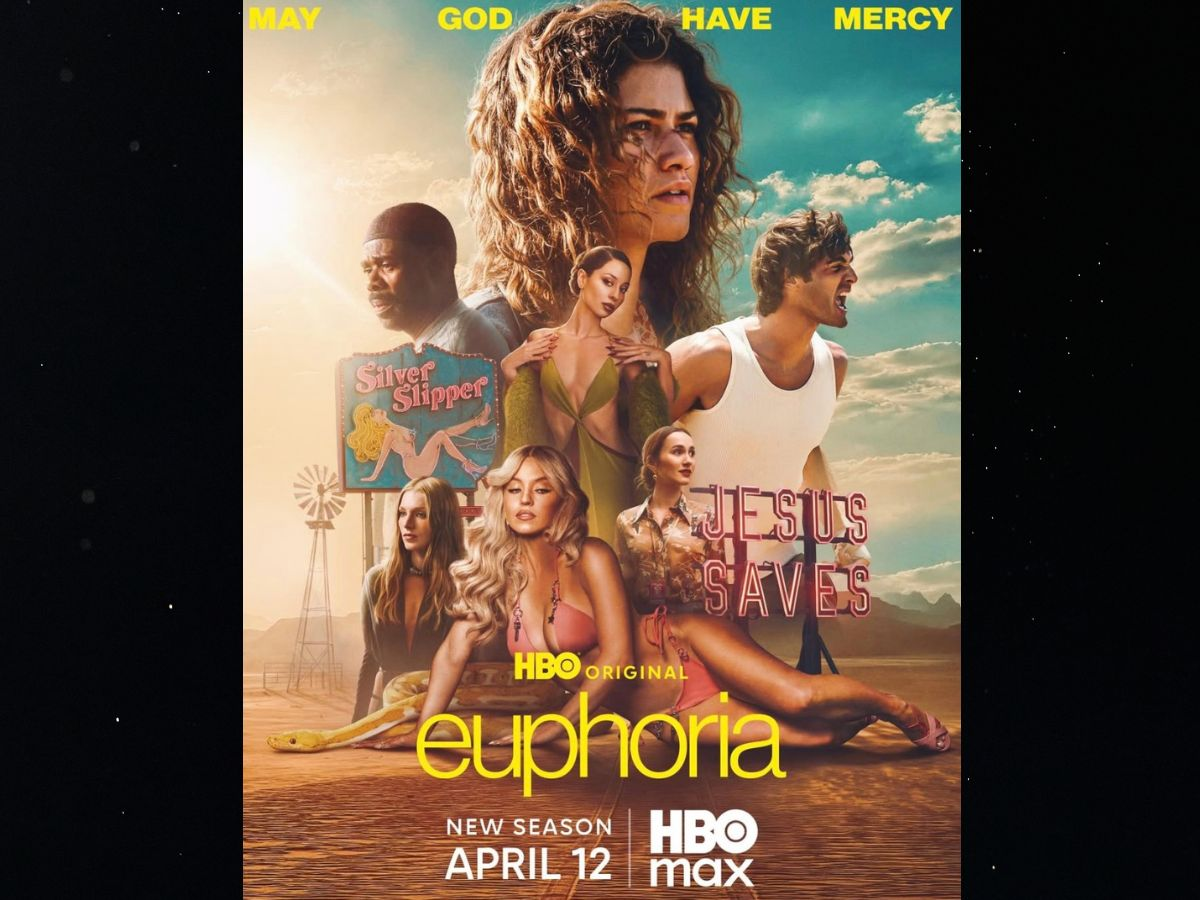
Since its debut on HBO Max in 2019, the television show Euphoria has captivated viewers through its dark realism and aesthetics.
With its unusual coming-of-age story following the lives of complicated and ultimately flawed teenagers, audiences found themselves wanting more.
Rue Bennett, the show’s main character portrayed by actress Zendaya is a young woman struggling with drug addiction following her overdose. Alongside Rue, we get the dramatic but natural plotlines of sexuality, abuse and insecurity through her peers.
Through its dreamy and edgy visuals, Euphoria tackles difficult topics in an honest way that makes it hard to peel your eyes away from it.
And four years after season two’s release, the long-awaited third season returned on April 12—only almost entirely different.
In taking a major creative risk, director Sam Levinson shifts the focus of the lives of the characters after they leave high school.
This decision ultimately leaves out what people liked the most about the series—the psychological complexity in its morally grey characters that held emotional wounds that resonated with viewers.
In their adult lives, Rue finds herself entangled in human trafficking, while Cassie monetizes her body online and the once intimidating Nate finds himself troubled with illicit business.
Even characters who got more interesting throughout the seasons, suddenly became dull versions of themselves, with Lexi chasing the Hollywood dream and Jules being a sugar baby.
While these storylines sound promising in theory, its execution strips these characters of what made them genuine and alluring.
Rue is the character most affected by the shift. She is no longer haunted by the consequences of her past and is instead driven by external events.
Defining elements that took control of her life such as her father’s death and her drug addiction are pushed into the background, culminating in a failed arc that feels disconnected from the one the series carefully built during its first two seasons.
Her romantic relationship with Jules, one that used to be an emotional pillar of the series, loses all narrative weight and ends without a fair conclusion.
The manipulative and abusive Nate Jacobs who once domineered over the others, suddenly softens despite the power and freedom that comes with adulthood.
From his exploration of his sexuality and familial troubles, the season doesn’t pick up what it once started and leaves viewers questioning what could have led to such a drastic change.
Cassie, a teenage girl who once represented the struggle that comes with men’s preying eyes and her lost dreams, becomes a hypersexualized figure who lacks depth.
There is an excessive amount of time dedicated to depicting Cassie’s OnlyFans career and her heavily objectified appearances such as a dog and baby costume she wears.
Perhaps the most frustrating moment is Rue’s death, a character that fought for years only to meet her fatal end after an accidental overdose.
In reaction, Ali Muhammad, one of the show’s strongest moral voices, chooses to avenge her by killing Alamo in what is presented as an act of justice.
The decision contradicts everything the character spent years representing: someone determined to prove that redemption is possible and that cycles of violence can be broken.
Ultimately, the problem isn’t that the characters changed—its the unspoken explanation as to what changed within them.
As this season unfolds, it’s difficult not to question how much of what originally made Euphoria such a cultural phenomenon truly reflected Levinson’s own creative vision.
As many TV shows do, Euphoria struggled to stick the landing, sacrificing its once profound and well-written main characters.