

When 18-year-old Juan Gomez and his family were detained in their Miami home by Immigration and Customs Enforcement in 2007, their story made national headlines.
Gomez and his brother were spared from deportation. His parents were not.
Brought to the United States from Colombia when he was 2, Gomez was a Dreamer—an undocumented immigrant who was brought to the country as a minor. College was out of reach for him—except Miami Dade College.
Gomez’s story resonated deeply with other undocumented students who felt their future was defined by their legal status.
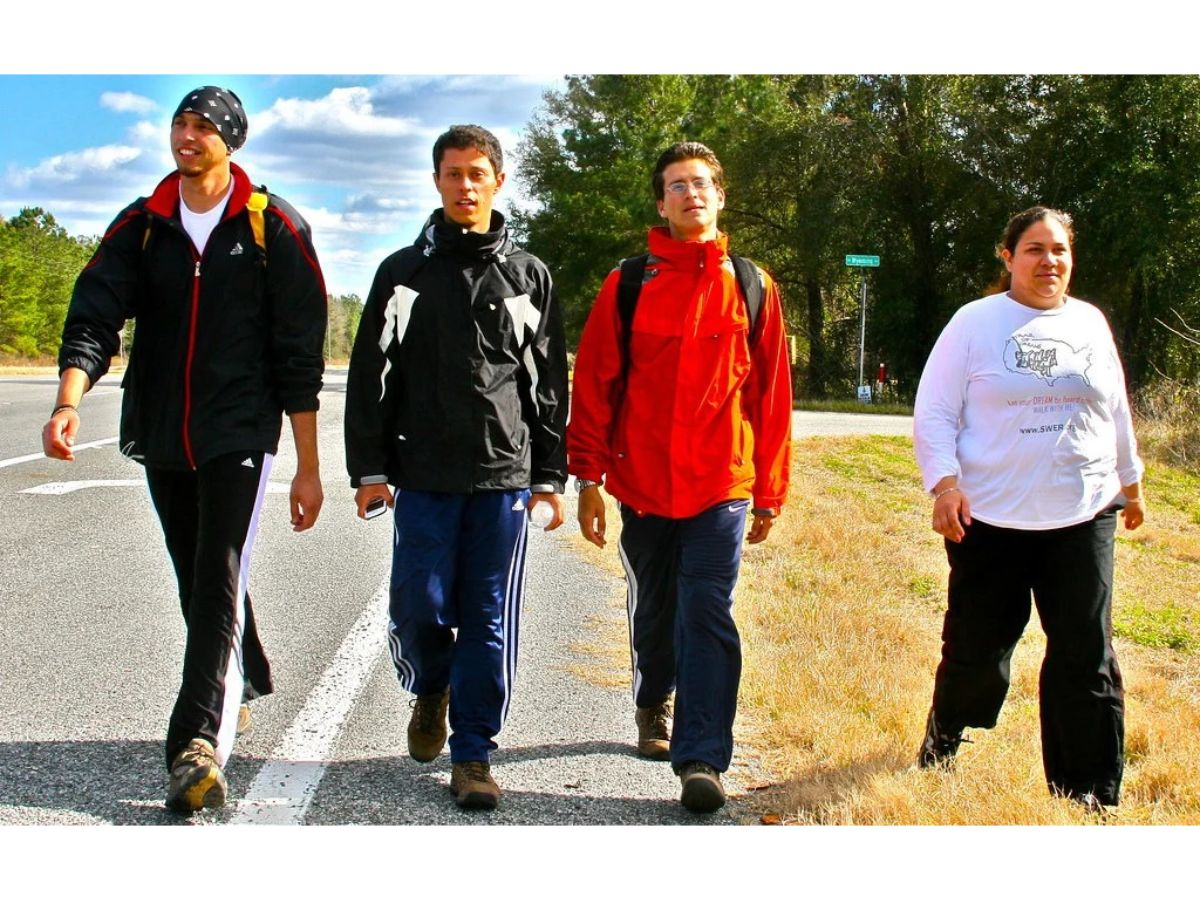
Among them were MDC students Maria Gabriela “Gaby” Pacheco, Felipe Sousa-Lazaballet, Juan Rodriguez (now Isabel Sousa) and Carlos Roa, who also desired change.
On Jan. 1, 2010, they ventured on a 1,500-mile walk from the historic Freedom Tower in Miami to the White House in Washington, D.C. They demanded immigration reform.
Dubbed “The Trail of Dreams,” the movement sought to end the separation of families and the deportation of undocumented students like themselves.
The young activists walked 15 to 18 miles per day, six days a week, enduring heat, rain and snow. Throughout 42 stops across the southeastern parts of the country, they received support from churches and community coalitions and encountered Ku Klux Klan members.
When they reached their final destination in D.C. on May 1, they met with Valerie Jarrett, the senior advisor to then-President Barack Obama.
Two years later, Obama ratified DACA, the Deferred Action for Childhood Arrivals, granting temporary protection and work permits to undocumented immigrants who came to the United States as children before 2012. The measure did not provide a pathway to permanent lawful status.
Today, more than 260 Dreamers face detention under the Trump Administration, according to the American Immigration Council. Thus far, 86 have been deported to countries they barely know. Florida has barred Dreamers from enrolling in the state’s public colleges and universities.
Nearly two decades after the Dreamers’ efforts to change immigration policy, where are they today and did their vision come to fruition?
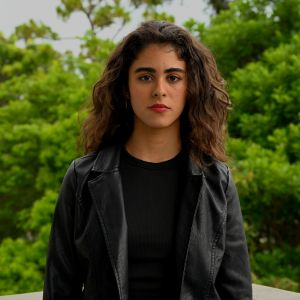
Maria Gabriela “Gaby” Pacheco

Pacheco arrived from Ecuador in 1993 with her parents and three siblings when she was 8. Fearing the rising street crime and violence in their country, the family overstayed their tourist visa and started the process of obtaining a green card.
A visit to University of Miami when she was in the fifth grade left her awestruck and made Pacheco realize she wanted to go to college.
But when one of her older sisters came home sobbing because she was unable to pursue her dream of studying to become a nurse, she was heartbroken.
From that day on, Pacheco made it her goal in high school to excel in every aspect.
She poured her soul into her studies, taking advanced placement classes and participated in the orchestra, track and field and basketball team.
While students around her went on to Ivy League universities, Pacheco’s only choice was to stay at MDC.
As Kendall Campus student government president in the 2004-2005 school year, Pacheco founded the Students Working for Equal Rights, a student organization that advocated for immigrant rights. There she met Felipe, Isabel and Carlos.
Six years later, they teamed up for the Trail of Dreams. When they completed the mission, Pacheco stayed in D.C. to continue advocating for immigrant rights.
“My situation was the situation of millions of people in the country, and this is not about me. This is about my sisters. This is about my friends, millions of dreamers,” Pacheco said.
In 2013, Pacheco became the first undocumented Latina to testify before Congress, addressing the Senate Judiciary Committee about the urgent need for immigration reform.
That same year she joined TheDream.Us, an organization dedicated to providing scholarships to Dreamers in the U.S., as a volunteer.
The program, which partners with 80 colleges including MDC across 20 states, has raised millions of dollars to help students pay for their studies.
Pacheco has an associate of arts in music education, an associate in science in early childhood education and a bachelor’s degree in special education.
She became a naturalized citizen in 2023. Today, the 41-year-old is the CEO of the organization.
“It’s beyond heartbreaking and unfathomable that we are once again at a place where a law or a policy is telling a human being that they cannot get access to education,” Pacheco said.
Felipe Sousa-Lazaballet

Felipe Sousa-Lazaballet, who is running as a democratic candidate for the Florida House of Representatives District 42 this year, found his love for advocacy at Wolfson Campus.
“I went from being a young undocumented person who was very afraid about my immigration status with the fear of getting deported to getting very involved in the immigrant rights movement,” Sousa said.
At 14, Sousa migrated to Miami from an impoverished area of Rio de Janeiro in Brazil. He first confronted obstacles of being undocumented when he graduated from Dr. Michael Krop Senior High School in 2005.
Sousa was accepted to prestigious schools like Duke University but could not afford to attend because he did not qualify for financial aid.
He learned about MDC through a friend in church. He applied and was accepted to the Honors College.
Every day, he took a two-hour bus ride from North Miami Beach to Wolfson Campus. He attended a full slate of classes and participated in Student Government Association serving as president in the 2007-2008 school year.
After classes, he took a bus to Q Restaurant & Lounge in Aventura, where he worked as a busboy until about 2 a.m. to help pay the portion of his out-of-state tuition which his scholarship did not cover.
“It was really difficult. But I understood I was getting the opportunity of a lifetime,” said Sousa, who graduated summa cum laude from MDC in 2008 and went on to pursue a bachelor’s degree in business at St. Thomas University. “Miami Dade College changed my life. ”
After the Trail of Dreams, Sousa continued to advocate for immigrants and LGBTQ+ rights.
He moved to Orlando after the Pulse nightclub shooting in 2016 to work on community recovery efforts in the Orlando Mayor’s Office.
Then he became the executive director of the Hope CommUnity Center, dedicated to advocating for immigrant families and the working poor in Central Florida, a position he holds to this day.
In 2022, when the Defense of Marriage Act, which outlawed federal recognition of same-sex marriages, was struck down, Felipe got married to his husband and obtained his green card.
“If elected, one of the first bills I will ever introduce will be to restore in-state tuition and to make sure we make it clear that undocumented youth in the state of Florida deserve to have a path to education,” the 40-year-old said.
Isabel Sousa
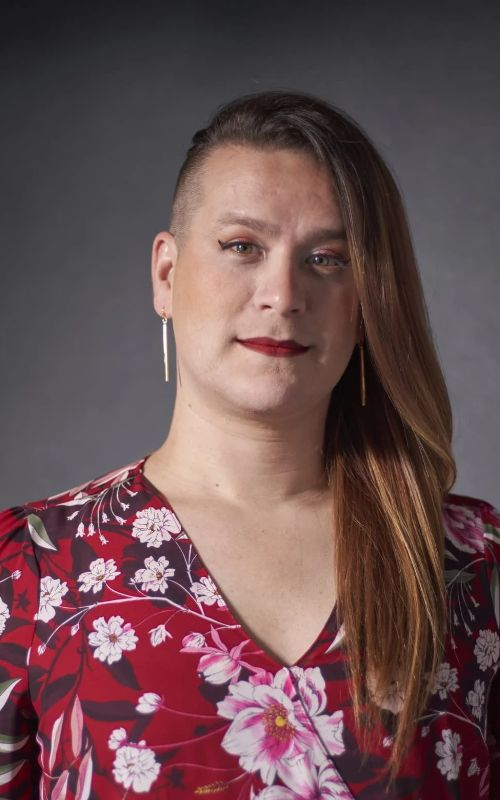
When MDC students organized to protest the detention of Juan Gomez in 2007, Isabel Sousa, then a senior in high school, was eager to get involved.
She reached out to the Florida Immigrant Coalition who was deeply involved in the effort. They encouraged Sousa to attend meetings at Wolfson Campus.
“It took me like two hours to get to this meeting, but there was nowhere else in the world I wanted to be on a Wednesday night because I met the most incredible people in my life,” said Sousa, who was born in Colombia and raised in Miami.
There, she found a community that led her to enroll at MDC. Through the organization, she became close friends with Felipe Sousa-Lazaballet and other young immigrant-rights advocates.
At the time, many of her family members had been denied asylum. Some moved to Canada, others went back to Colombia. Her father and sister were making plans to leave the country and she faced the threat of being deported.
Feeling like she had “nothing left to lose,” Sousa was inspired to start the Trail of Dreams.
“I remember one day (in October of 2009) I was fed up with the situation, and I put on my shoes, walked out the door and told Felipe ‘I’m walking to D.C. right now’,” Sousa said.
Isabel recalls Felipe stopping her and saying: “We are in this together. Let’s wait until Jan. 1, 2010. It’ll be the start of a new decade, and we’ll be able to start writing history on our own terms.”
Two months later, the group started their walk to D.C.
During that period, Sousa was being sponsored by her stepmother and was navigating the process of obtaining legal status. After the Trail of Dreams, her green card was approved.
She earned an associate degree in business administration at MDC and later completed a bachelor’s degree in sociology at the University of South Florida.
“We literally went into the trail, making the commitment to each other that if we were going to die, we would do it with fire because we were standing for visibility,” Sousa said.
Now a U.S. citizen, Sousa has continued her commitment to social justice through philanthropy and nonprofit leadership.
“I kept trying to make a difference in the world,” Sousa said.
In 2019, she began working with foundations fundraising for youth organizations and racial justice campaigns in the United States and Latin America. Since 2024, Sousa continues to do similar work as a consultant.
Carlos Roa
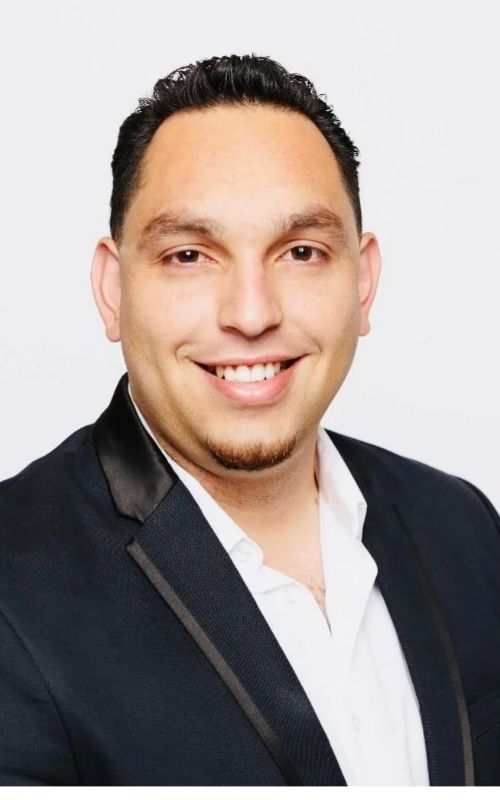
Brought to the United States from Caracas, Venezuela, Roa moved with his family to New York as a toddler in 1989. When he was 4 years old, his family relocated to South Florida.
But growing up in Miami to undocumented parents proved extremely difficult.
His father, who was an industrial paint specialist, was forced to close his shop in Venezuela due to a trade crisis in the country and Roa’s mother developed breast cancer.
Following the September 11 attacks in 2001, Roa became increasingly concerned about his family’s immigration status, knowing immigration reform would be difficult.
After his mom succumbed to cancer 10 months after he finished high school in 2005, he began working in construction management to help the family financially.
However, by the end of 2007 the then 20-year-old lost his job due to the recession. He returned to school.
“I needed to do something because I was worried about getting to my current age and not having a profession,” Roa said. “So, I started with one class in the spring of 2009.”
Roa pursued a career in architecture at Wolfson Campus, a profession he always felt fondly about ever since he was a kid building Legos.
Like Felipe, Gaby and Isabel, Roa was part of the group of students that protested outside of the Broward Transitional Center, where immigrants were detained. But, he knew that it was not enough to create systemic change.
That opportunity came with the Trail of Dreams.
“We had the backing of the administration [at MDC] this time under the leadership of [Eduardo J. Padrón, who was college president at the time],” Roa said. “He actually asked President Obama to meet with us.”
Roa got his associate’s degree in architecture from MDC in 2013 and a bachelor of architecture at Illinois Institute of Technology in 2016.
After Obama established DACA in 2012 through an executive order, Roa was able to secure temporary protective status.
For almost five years now, the 39-year-old has been a project manager for a construction company. He is currently going through the Permanent Labor Certificate process in hopes of obtaining his green card.
“I would always get told ‘you are a true dreamer, you wanted to become an architect and you are doing it,’” Roa said. “We are a living testament of the American Dream.”
The headshots in this story were provided by the subjects interviewed.
Click here to subscribe to our bi-weekly newsletter, The Hammerhead. For news tips, contact us at mdc.thereporter@gmail.com.