

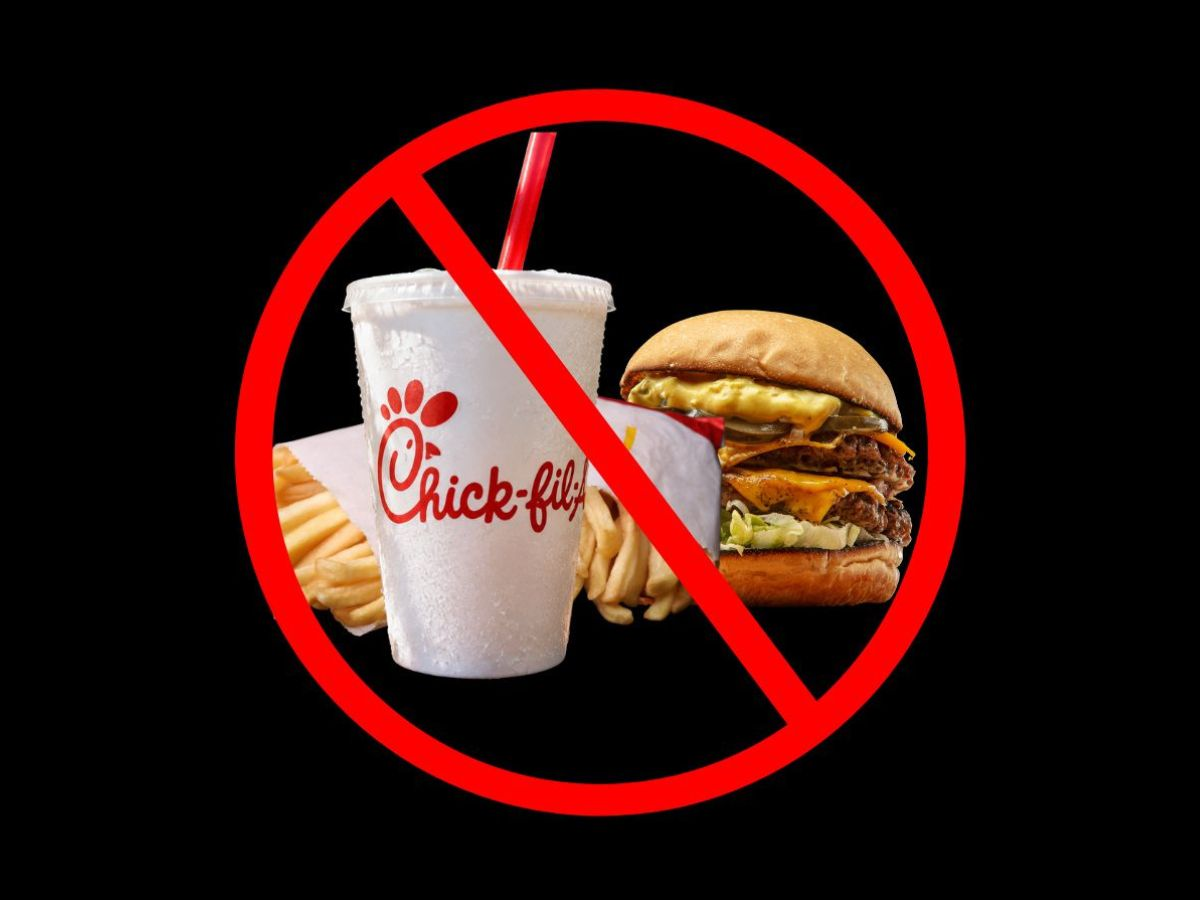
For a week the anti-sludge movement became the talk of Kendall Campus after it took over building 2 on Oct. 20. Is the movement famous for its message or the humor surrounding it?
The movement, led by social media influencer Steven Adelman, is part of a tour around Florida college campuses to protest against the consumption of ultra-processed foods.
Chanting “resist the sludge,” a crowd of Kendall Campus students gathered around him while recording with their phones. But, how many understood the message?
Sean Alvarez, a Kendall Campus student majoring in business administration, who has been following Adelman for a few years, claims the movement changed his life.
After cutting fast and oily foods from his diet, he noticed a shift.
“I was feeling a lot better. I was getting a lot more gains in the gym, and overall, I just felt like a better version of myself, more productive, more drive to do things,” he said.
But not everyone at the protest shared the same understanding. It was difficult to tell who genuinely connected with the message. Some people stood holding Little Bites mini muffins and Chick-Fil-A cups and others just seemed to want to be included in a viral video.
“Many people were just there for attention or just to say they met the guy,” said 18-year-old Felipe Otero, who will be attending Florida International University in January and supports the cause.
Although Adelman has risen in popularity on TikTok and Instagram with more than 990,000 followers combined on both apps, all that is known about him is what appears on his social media accounts.
According to his LinkedIn, he graduated from the University of Central Florida with a bachelor’s degree in science in business administration and marketing. He worked at FedEx for more than a year, starting as an intern and later, a digital sales representative and executive.
Adelman began doing videos at the beginning of this year, expressing how bad habits can affect you and processed food, which he coined “sludge,” can damage your body.
He started making a profit when the videos gained publicity from crowds that gathered around him at universities.
On an instagram anti-sludge movement post in early October, Adelman explained his approach to Dr. Eric Berg, an American chiropractor who promotes nutritional coaching online, while attending the Make America Healthy Again (MAHA) Summit.
He said he intentionally combines humor with health content to make serious topics more approachable, especially for younger people who are often hooked by entertaining content.
But if viewers encounter Adelman’s comedic content without exploring the more substantive information he shares, they may dismiss the movement before understanding what he is trying to accomplish.
The anti-sludge movement is about encouraging students to make healthier eating habits.
Its success should not be measured by the size of the crowds Adelman attracts or the number of views his videos receive. It should be measured by whether people gain a better understanding of what they consume.
A crowd can make a statement, but what happens after the cameras stop recording is what matters.