


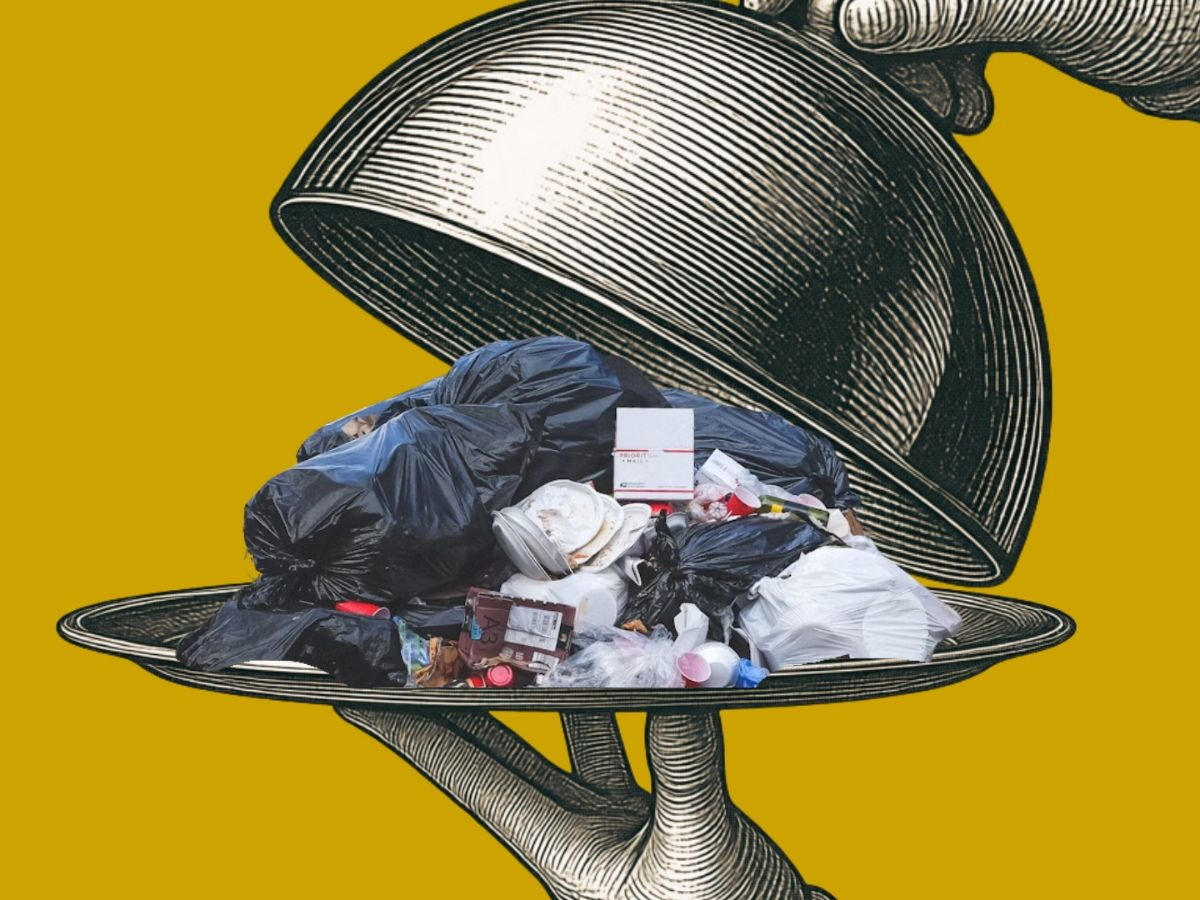
Are you tempted to shop more than you should by big corporations? Do you really need all the limited-edition plushies you buy? Do you buy overflowing Shein carts made by underpaid workers?
What will it take for you to boycott the never-ending cycle of mass trash production?
Overconsumption with an individualistic mindset has led to the death of sustainability. Is there hope under that massive pile of trash?
When we shop for short-term needs—and a lot of other things we don’t need—we buy what’s most accessible to us. That excess is usually followed by increased supply.
To catch up to ever changing trends and still profit, corporations make things as cheap as possible.
They cut craftsmanship and quality materials, giving the things we buy shorter life spans and forcing us to constantly buy and take advantage of the working class.
Every time we buy excessively in pursuit of the cheapest price, we add to resource depletion, higher emissions and waste that lives longer than us.
That draining cycle is one of the primary drivers of the planetary crisis through pollution, according to the UN Environment Programme.
The mantra, “reduce, reuse, recycle” simplifies the solution to overconsumption.
This is the way it should be: if something can’t be reused or recycled then shop for a sustainable option. If something can’t be reduced back to dirt, ask yourself if you really need it?
Before the 20th century, people understood the value of material goods; recycling wasn’t the same concept as we know it today.
When someone lost the usefulness for something, they just recycled it.
As Sheila Mulrooney Eldred, an award-winning health journalist once wrote in an article for history.com: “If a dress went out of style, you added new buttons or sent it back to the dressmaker to fashion a trendier frock. Eventually, the fabric would be turned into a quilt or a rag rug or just a rag.”
But in the 1950s, big corporations saw the money behind plastic products, and they replaced it with everything. They marketed for consumer convenience without telling us the real cost—growing landfills.
By the 1970s, environmental concerns grew and in the 1980s plastic companies lobbied for recycling instead of bans.
“If the public thinks that recycling is working then they’re not going to be as concerned with the environment,” Larry Thomas, the Former President of the Society of the Plastics Industry told NPR.
Shopping intentionally sounds easier than it is.
Corporations have prioritized profit over the planet and those who live on it. It’s big business for these companies.
The problem with over consumption and plastic waste is much bigger than just waste, it’s a cycle meant to keep you trapped.
We need to let go of complacency and start to inconvenience ourselves for the collective future. Understanding the sustainable alternative is the first step.
Choose to buy used rather than new, pick glass over plastic, cotton over polyester. Reduce and reuse rather than recycle into a landfill.
Holding corporations and governments accountable switches the narrative that we are to blame. Setting stricter regulations and bans prevents reckless production.
Know who you vote for, stop shopping with corporations that don’t care, build community and support local businesses.
It hasn’t always been this way but we can migrate back to a sustainable lifestyle.