
Throughout American history, moments of significant change have often been accompanied by tumultuous periods of political violence.
The 1960s, for instance, brought a wave of unrest fueled by the Civil Rights Movement and opposition to the Vietnam War. It was marked by mass protests, police brutality and the assassinations of President John F. Kennedy and Martin Luther King Jr.
A decade earlier, American society was overshadowed by the Red Scare. Cold War paranoia led to unsubstantiated accusations of communist affiliations, congressional investigations and the blacklisting of prominent Hollywood figures.
The aftermath of those eras left a lasting impact in U.S. politics. Yet, despite decades of progress, political violence remains a persistent threat.
In recent times, it has taken many forms: the Jan. 6 insurrection, partisan assaults against elected officials like Nancy Pelosi and assassination attempts targeting then-presidential candidate Donald J. Trump.
This year alone, Pennsylvania Gov. Josh Shapiro and his family suffered an arson attack at their residence and Minnesota legislator Melissa Hortman and her husband were murdered on the footsteps of their home.
On Sept. 10, the nation was shaken once again as Charlie Kirk, an influential conservative advocate among young Americans and founder of Turning Point USA, was publicly assassinated during a peaceful debate at Utah Valley University.
The homicide sparked an undeniable outbreak of radicalism that has been escalating in the United States.
In the wake of Kirk’s death, social media became a battleground. Critics posted derogatory comments—some even mocking and justifying his murder—while right-wing figures publicly condemned Democratic leaders, accusing them of being at fault for the violent incident.
Both reactions were morally reprehensible and reflective of a deepening national divide.
“We’re living in a time where disagreement is seen as betrayal. But we need more disagreement…if we want to preserve democracy,” said Utah Gov. Spencer Cox, who oversaw the investigation into Kirk’s murder, during an appearance on The Ezra Klein Show.
The conflict between media outlets and government officials is eroding moral decency and encouraging censorship.
Within the same week, late-night talk show host Jimmy Kimmel made a controversial statement satirizing the assassin’s political affiliation and President Trump’s public response.
The comment, later proven to be factually incorrect, received criticism from Federal Communications Commission Chairman Brendan Carr, who claimed Kimmel was misinforming the public and threatened regulatory action against ABC and its parent company, Walt Disney Co.
Nexstar Media Group—one of the country’s largest TV owners—complied by pulling the show from 23 affiliates, prompting ABC to suspend Jimmy Kimmel Live! “indefinitely.”
After facing audience backlash and accusations of corporate capitulation, Disney reinstated the show on Sept. 23. However, Nexstar and Sinclair Broadcast Group will not broadcast the show in their stations.
Meanwhile, the Trump administration has filed defamation lawsuits against major news companies including The New York Times, The Wall Street Journal, CBS and ABC—further intensifying its adversarial relationship with the press.
This is not the first time the media has faced persecution. But the normalization of hostility toward journalists and media institutions is deeply troubling.
Each day, dialogue is being diminished by hate rhetoric dominating social media platforms. Algorithms are exacerbating political outrage, instigating partisan warfare and leading us toward more violence.
As Kirk himself once warned, “when people stop talking, that’s when you get violence…that’s when civil wars happen.”
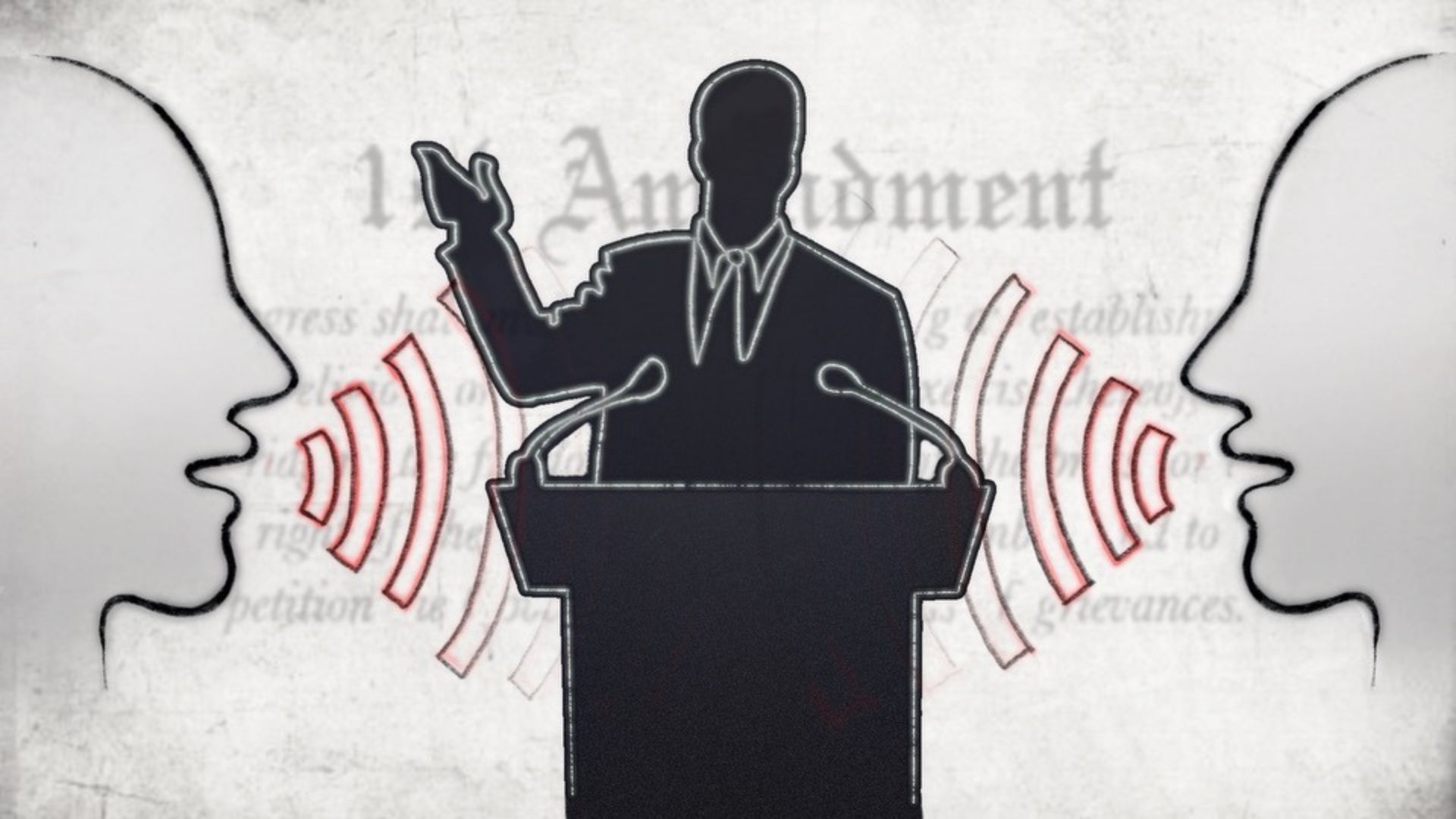
We can’t view political violence and censorship as an isolated attack against one individual. It is an attack against American democracy and our constitutional right to freedom of speech.
Similarly to other pivotal moments in our historical trajectory, the way institutions respond will shape civil discourse and define the nation’s future.