Since 1906, the National Collegiate Athletic Association (NCAA)—a nonprofit organization that regulates student athletes in more than 1,281 institutions in North America—has seen many changes.
For most of its existence, the NCAA has faced controversy for restricting the kinds of benefits and monetary compensation that student athletes can receive from schools.
In 2009, O’Bannon v. NCAA was the first antitrust lawsuit where Ed O’Bannon, a UCLA basketball player, challenged this rule, arguing that the NCAA and its licensing partners were profiting from student-athletes through products like EA Sports video games while players got nothing.
The judge ruled the NCAA’s ban as an unlawful restraint of trade.
While the case did not immediately create today’s marketplace, it laid the foundation to the NCAA v. Alston—a 2021 Supreme Court case about caps on education‐related benefits.
The Court’s unanimous antitrust ruling and Justice Brett Kavanaugh’s concurrence signaled that broader compensation limits, including name, image and likeness brand deals, were coming to an end.
In July 2021, within days of the Alston decision, the NCAA adopted its interim NIL policy in July of 2021.
With this, the NCAA states that “Student athletes may receive compensation from third parties for use of their name, image and likeness (NIL), such as social media posts, brand appearances or promoting products and services. All three NCAA divisions support opportunities for student athletes to pursue NIL consistent with rules that protect fair competition.”
That proves that the money was always there; athletes just were not in the revenue line.
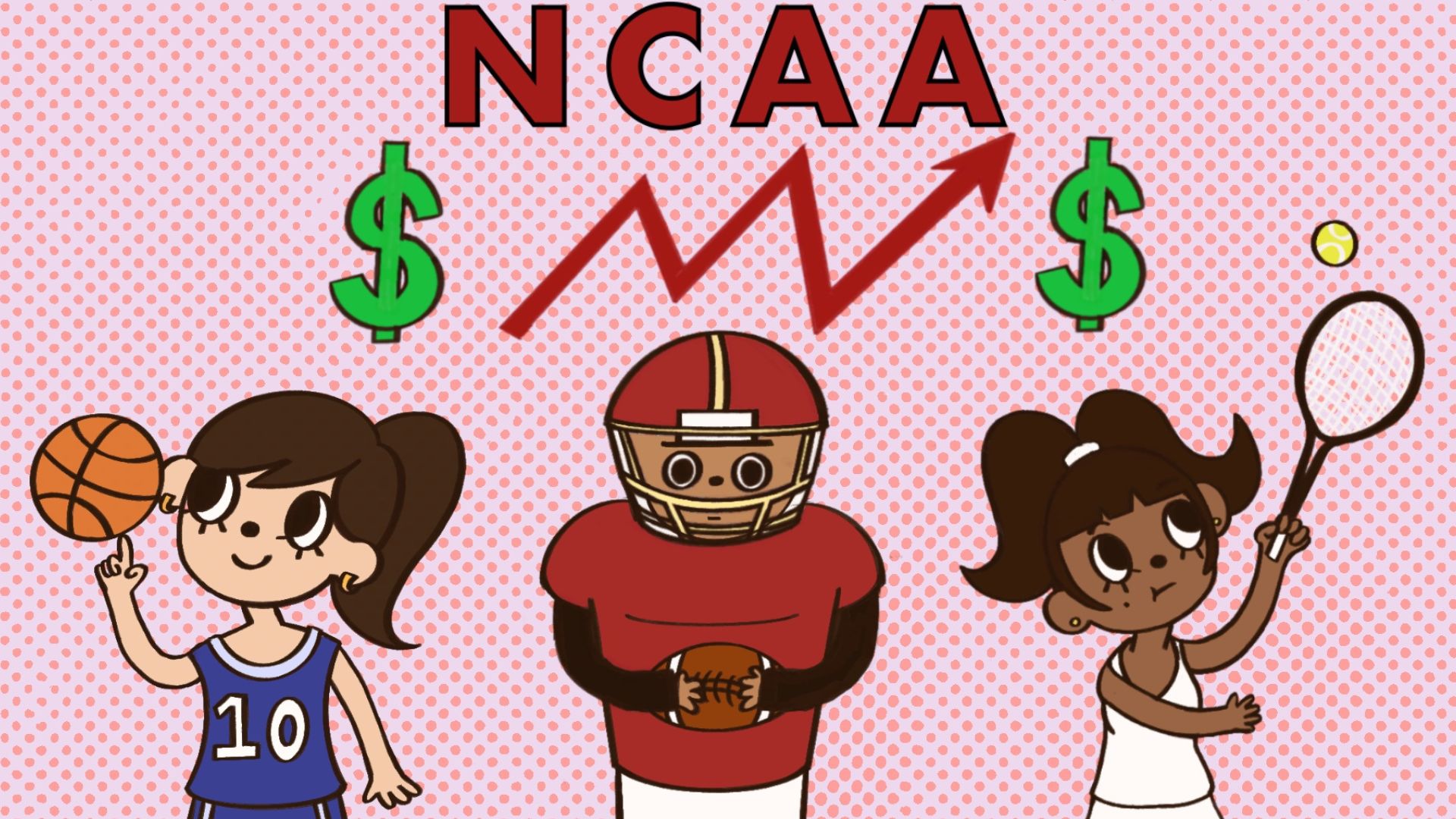
Now, NIL deals have blurred the lines between amateur and professional sport and are re‐wiring incentives across the industry.
NCAA data and independent dashboards suggest an average disclosed deal is valued in the low thousands but a median disclosed deal is under 100 dollars, reflecting few large contracts and many micro‐deals for the average athlete.
NIL collectives and major brands direct six and seven‐figure deals to star quarterbacks, elite women’s basketball players and highly marketable local “heroes”, making NIL a visible factor in transfer and recruiting decisions.
As the market grows beyond a billion dollars annually, the gap between the “haves” and “have‐nots” is likely to widen.
Most of the money today is concentrated on specific sports and even those are heavily skewed toward a small number of star athletes.
Football drives the largest share of deals and dollars. One 2024–25 snapshot has football accounting for roughly 40–75 % of all NIL activity.
Women’s sports as a group remain a smaller part of total profit. But it’s growing much faster than men’s sports, with some reports estimating women’s NIL revenue growing four to five times faster between 2022 and 2024.
There needs to be a way to ensure that smaller programs have a chance against the bigger ones. Otherwise, smaller programs will simply lose the financing to compete.
The NCAA profits off the backs of many athletes. It’s about time athletes start to get properly compensated for that.