
Across the world, societies have forged distinct ways of living—each rooted in their cultural heritage, beliefs and social values.
America and Europe, though both vast and diverse, have followed unique historical trajectories in this regard.
Throughout the centuries, their perception of time, value and the meaning of life have taken different forms.
Despite their rivalry, these cultures are deeply interconnected. America was shaped by European ancestors, and popular European dishes were created with ingredients like tomatoes and corn, which were brought from the Americas.
Historical exchange braided their paths and formed the civilizations we recognize today.
Curious about the intersection of these worldviews, I immersed myself in a study abroad program this summer that allowed me to explore Italy and France.
During my journey, I encountered new cultures and studied how art is embedded in humanity’s identity. I discovered an ethos that captivated me—woven through countries, expressed differently in each language, yet echoing the same truth.
In Italy, they call it la dolce vita: the belief that life is meant to be savored.
Walking through Paris at night, I witnessed more laughter, movement and joy than I ever had.
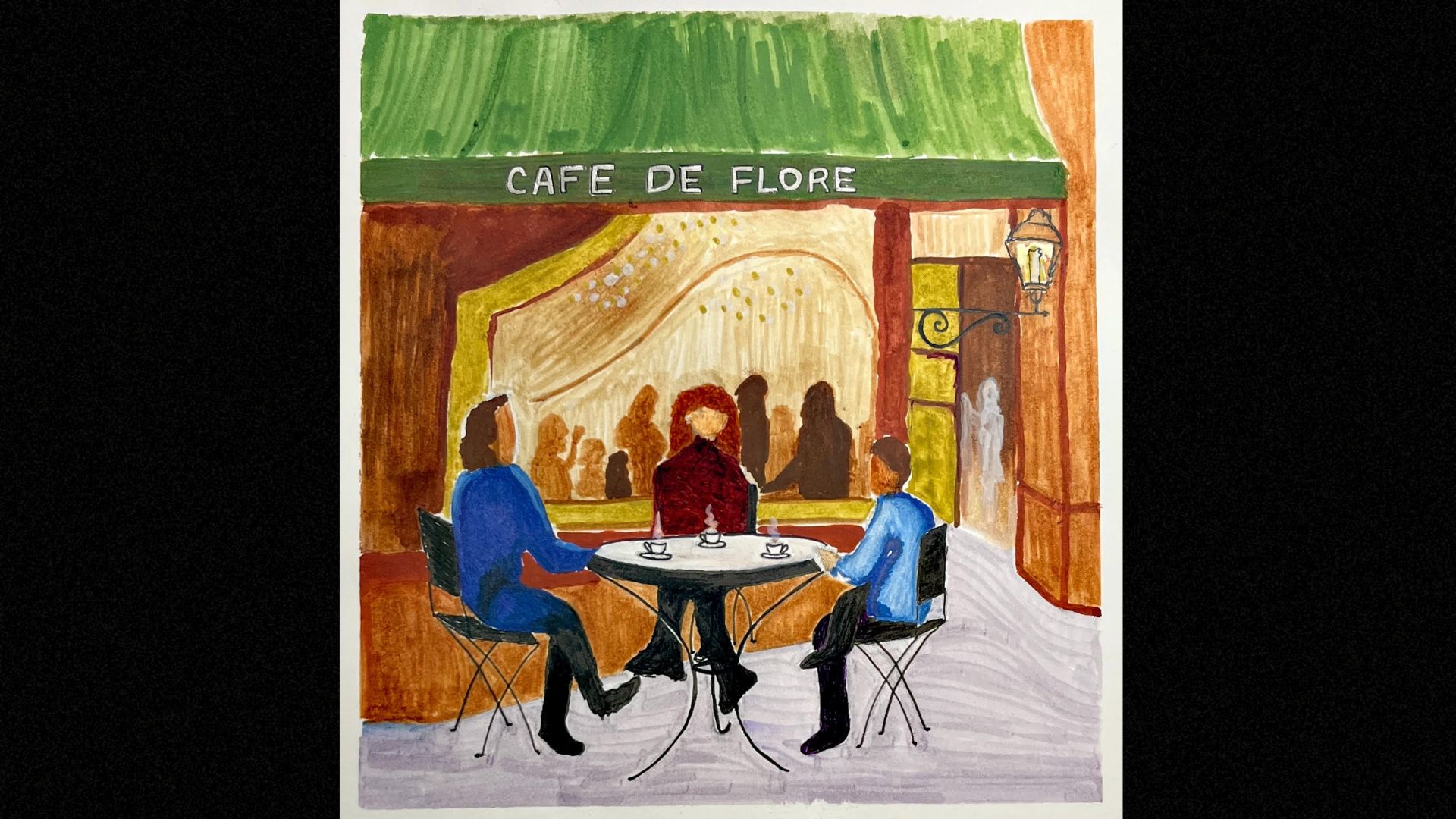
The city glowed vibrantly, unfolding in slow motion. Cafes became social commons, streets filled with friends and families—places where people lingered for hours, unhurried and present in the moment.
Rather than an escape, this was how ordinary people spent their days. This was how renowned artists and writers such as Ernest Hemingway and Vincent van Gogh lived.
In Florence and Rome, the presence of art and history is felt in every corner, whether it’s in the grandeur of Il Duomo or an old man playing music on the street.
Even the food tastes different. Not just because it’s less processed or free from induced hormones, but because you’re given time to savor every bite.
People in these societies thrive in the bohemian lifestyle. They walk to the local stores, greet neighbors and live in homes that reflect their lives not their status.
However, in the United States, everything moves at a relentless pace, centered around the pursuit of the capitalist “American Dream.”
People are individualistic and driven by ambition. Relationships are transactional and time is treated as a resource to be optimized. Life is better, greater and faster.
Many spend their lives sacrificing. They work tirelessly from 9 to 5, finally able to enjoy life after retirement.
Is that truly worth it?
A common misconception in American society is that an individual’s value lies solely in financial abundance or professional success.
Challenging these normative standards is not easy. But I am certain that this is not the ideal way to live.
We can all find meaning in the ordinary and have a lifestyle that fulfills us creatively, professionally and spiritually.
While studying abroad, I learned that human beings are not so different after all. Regardless of our ethnicity or the country we call home, we are all social beings—driven by aspirations, authenticity and the ability to make a difference in our own way.