
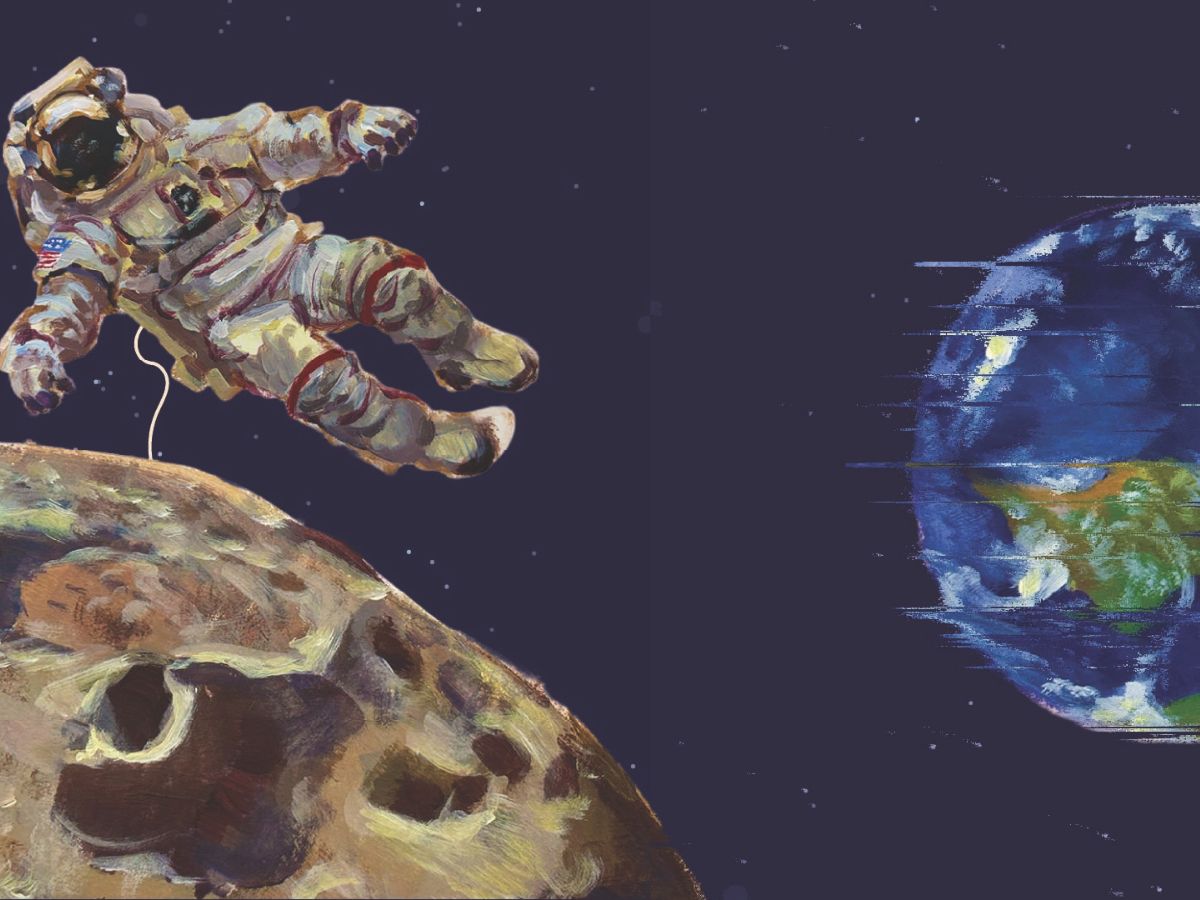
For the first time in 54 years, NASA sent astronauts to the moon. Artemis II successfully made its way around the moon, testing the boundaries of its technological advancements.
“This time, the goal is not flags and footprints… This time, the goal is to stay… America will never again give up the moon,” NASA administrator Jared Isaacman said during a news conference a week before Artemis II launched.
The moon missions were done between 1961 and 1972; with the last mission, Apollo 17, being the only one where real exploration was done by a scientist.
“Don’t fool yourself that this was all exploration; it was muscle flexing on the geopolitical sphere during a cold war while we were fighting a hot war in Southeast Asia against that enemy,” said Neil deGrasse Tyson, an American astrophysicist, on his radio show, StarTalk.
Every year since, the United States has cut NASA’s funding, further feeding the narrative that the real intention of going to the moon was to beat the Soviets.
Why go back to the moon now?
In 2020, China demonstrated its astronomical intentions when they refused to sign the Artemis Accords and responded with the International Lunar Research Station project. The plan aims to construct a permanent lunar base in collaboration with a dozen other countries, prioritizing diplomatic efforts and scientific exploration.
That motivated the U.S. to revive the “Space Race,” claiming that China’s efforts is a ploy to appropriate themselves of the water found in large craters of the Moon’s South Pole.
The moon should not be property any country can keep and exploit. It needs to be preserved for scientific research.
According to the Council on Foreign Relations— an independent organization focused on analyzing international policy—the U.S. should prioritize military advancements in space. We’re distracted going around the Moon while China expands their military satellites, imposing a new threat to our international security systems.
By keeping the Wolf Amendment—a piece of legislation that hinders collaborations with China—the U.S. is only holding itself back while China continues to successfully develop their astrotechnologies.
The U.S. should repeal the Wolf Amendment and negotiate for transparent agreements that allow scientific collaboration. NASA is intentionally apolitical and should remain as such.
Additionally, we need to limit space “exploration” to guarantee international safety and begin to treat lunar resources as a shared global challenge rather than a commodity we fight over.
Instead of running away from our problems on Earth and aiming to assert territorial dominance on the moon, we should collaborate with China and other countries on lunar expeditions to alleviate tension and share innovation. If both countries’ intent is truly scientific exploration, setting aside political disputes should be easier.