

Having won the hearts of readers and nonreaders alike with The Summer I Turned Pretty and Off Campus, Amazon MGM Studios returns with another novel adaptation.
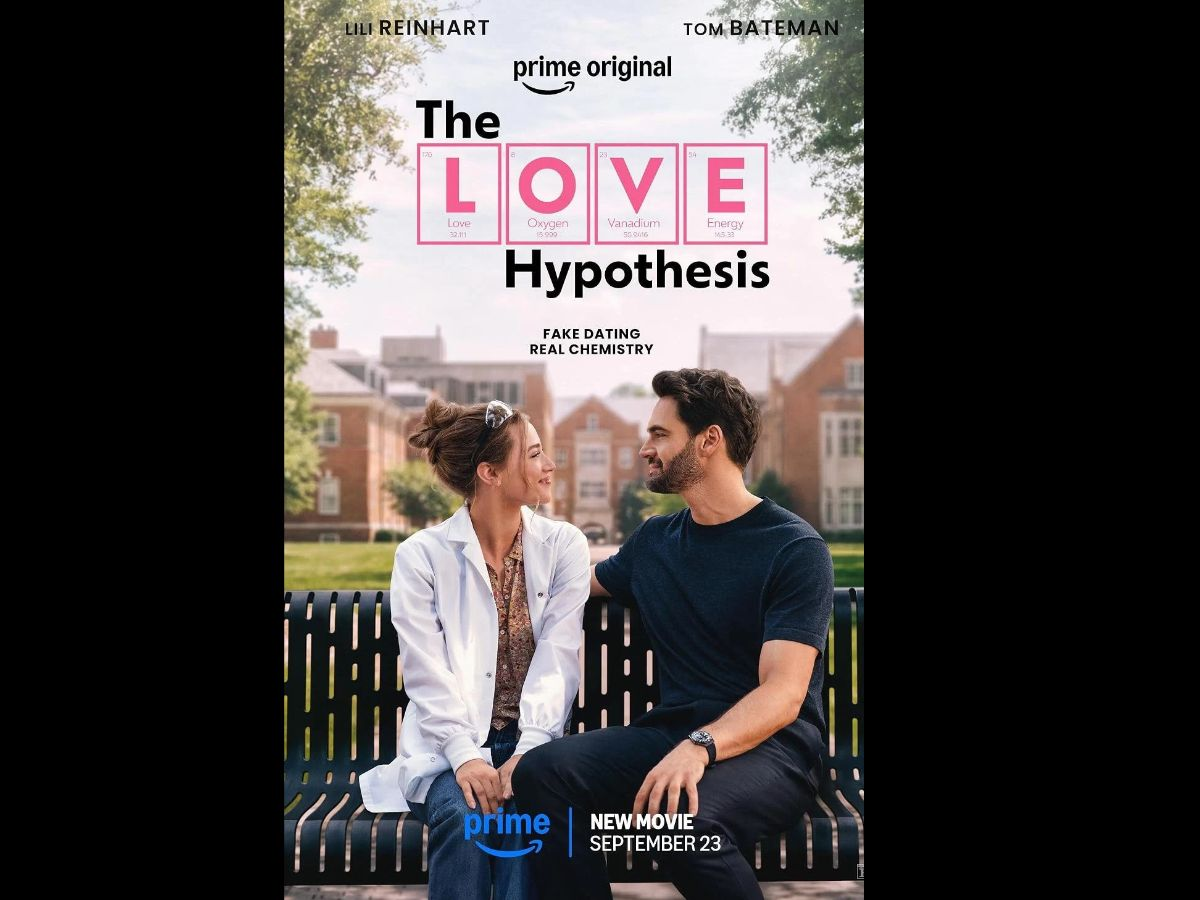
The romantic comedy The Love Hypothesis, premiered on Sept. 23 on Amazon’s streaming service Prime Video.
Adapted from Ali Hazelwood’s debut novel of the same title, The Love Hypothesis follows Olive Smith, a biology Ph.D. student studying at Stanford University with no time for love.
But when her friend Anh falls for Olive’s ex, she realizes that Anh will only feel comfortable pursuing her crush if she believes Olive has moved on.
In an attempt to free Anh of her guilt, Olive kisses a random guy, only to realize that the guy is Adam Carlsen, a professor at Stanford.
Known as ‘Dr. Evil’ by the graduate students, Olive is mortified to find out she has kissed the department’s most intimidating faculty member.
To Olive’s surprise, under his playful threat of a Title IX violation, Adam proposes they carry out a fake relationship for their own personal benefit.
And so begins the elaborate fake dating trope of awkward public displays of affection and social outings to make their relationship seem authentic as possible.
In typical rom-com fashion, these feigned feelings slowly turn into something genuine as the line between real and fake is blurred.
One of the key components to bringing a novel’s pages to life is casting. Lili Reinhart’s charismatic Olive and Tom Bateman’s brooding Dr. Carlsen share a sweet chemistry that highlights the humor and romance of the film.
But even that doesn’t save the movie from its flaws.
The dialogue is lackluster, filled with unnatural conversation, and scenes from the novel that make readers shake their head are just as cringe-worthy on screen.
While most of the book’s essence survives in the film, certain aspects that made the original source endearing don’t translate on screen.
Part of the novel’s charm came from Olive’s witty inner perspective and unfiltered feelings, which is replaced with her expressions and direct dialogue in the film.
Beloved characters like Malcolm, Olive’s roommate, stand out in the novel as a supportive confidant, aware of the truth behind the supposed relationship.
The adaptation, however, strips him of this role, making him a detached presence in the film and to viewers, a pessimistic friend to Olive.
While the movie is far from being the worst novel adaptation, the core problem lies in what current rom-coms seem to lack–nuanced characters.
It’s undeniable that Hazelwood has found commercial success with her novels as seen through the release of The Love Hypothesis.
When it comes to profit, adapting popular romance books is certainly worth it. But is it worth it for viewers to keep waiting on films like these?
At one point, love stories, the most profitable genre in the literary world, weren’t always about big names and effortless devotion.
Films like 13 Going on 30 or the classic When Harry Met Sally, introduced movie-watchers to flawed characters. As the film’s plots unraveled, so did its characters. They developed beyond their unlikable traits and brought the love story magic to life.
Story arcs were meaningful and by the end of the films, viewers felt a part of the lives they just witnessed.
Part of what makes these timeless rom-coms memorable are the risks they took to create imperfect characters that weren’t far from what we see in ourselves.
Shouldn’t we expect more from movies that have source material to build off of?
Though time can work against creativity, the novels they are based on already capture the feelings that make them captivating.
Unfortunately, The Love Hypothesis comes and goes without leaving a mark.