


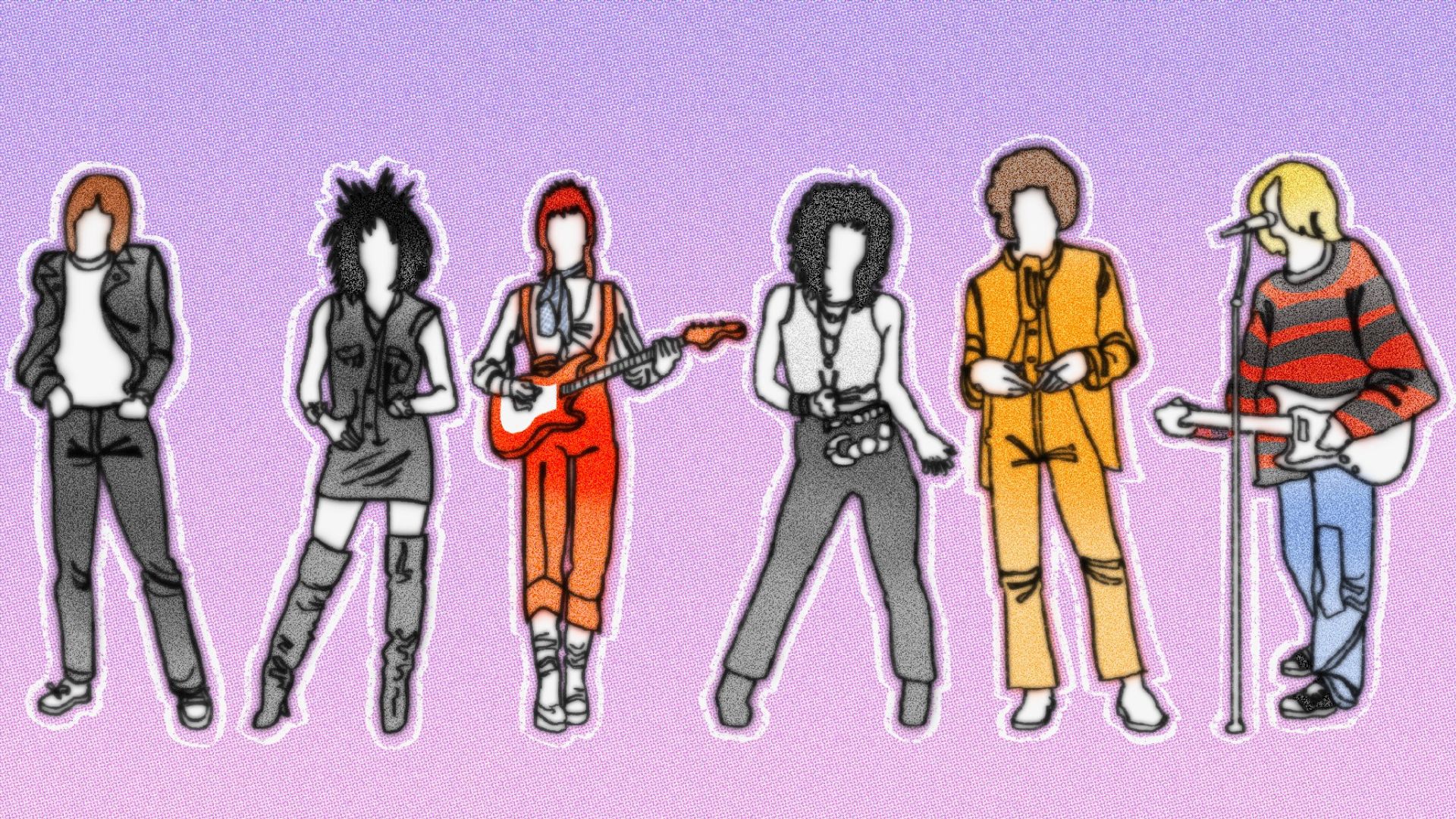
For decades, fashion has been a driving force in merging music and personal style. Clothes quickly emerged as a symbol of identity, rebellion and reflected the times themselves.
In the early 50s, self-expression was rooted in conformity. Men wore tailored suits and short, slicked-back hair and women kept a similarly polished look, wearing full skirts and sported soft curls.
Elvis Presley challenged those notions. He wrapped himself in colorful attire, jumpsuits, flashy jewelry and wore an iconic pompadour haircut.
By the mid 1950s, Presley became a household name in music and fashion. His clothes were made by Bernard and Guy Lansky, owners of a clothing shop in Memphis, Tennessee named Lansky Bros. Other revered musicians such as Duke Ellington and B.B. King frequented the store.
Efforts to break away from societal norms paved the way in the 1960s. Guitarist Jimi Hendrix and British model Twiggy were heavy influences on pop culture.
The 60s were an era of experimentation. Hendrix crossed boundaries with his eclectic look, wearing flared pants, bold colors, fur vests and paisley patterned shirts.
Twiggy furthered the growing “modernist” trend in 60s London. Her style was androgynous—short hair, wore boxy dresses and bold eye makeup.
The period was also heavily influenced by the “flower power” movement. The campaign was a peaceful form of protest against the militarism of the 60s, most notably the Vietnam War. Flowers were used as symbols of peace and a bohemian lifestyle was emphasized.
Glam and punk rock broke the mold of the 1970s. Artists such as David Bowie reinvented pop culture and emphasized theatrical presentation, specifically with Bowie’s “Ziggy Stardust” persona.
Ziggy Stardust sported a unique look, vibrant red hair, jumpsuits and a lightning bolt painted across their face. They served as a symbol of identity and gender fluidity.
At the same time, a New York City punk rock band known as The Ramones grew to prominence. They were known for their short, fast and loud music, which mirrored their image. All four of the original Ramones members wore leather jackets, blue jeans and Converse sneakers.
Their style brought appeal to the masses by being simple—the clothes were affordable and rebelled against the trends of the time.
By the 1980s, gothic rock culture emerged from the punk scene. The Batcave, a club based in south England, hosted bands that defined the genre, including The Cure, Siouxsie and the Banshees, Bauhaus and The Sisters of Mercy.
Siouxsie Sioux of Siouxsie and The Banshees rose as a fashion icon in the gothic scene. Her use of DIY materials such as fishnets and leather and geometric eye makeup became staples in the subculture.
In the 90s, a new wave of music emerged—grunge. The genre blends heavy metal and punk, and is defined by the sounds of distorted guitar pedals and raw vocals.
Grunge fashion was notable for combat boots, ripped jeans and flannels, creating an unkempt and messy look. The style reflected the lyrics and general mood of the era. Musicians such as Nirvana lead singer Kurt Cobain and Hole frontwoman Courtney Love were figureheads of the subculture.
Cobain often wore baggy clothing, Converse sneakers and mohair sweaters. Love, who was in a relationship with Cobain for about four years, wore baby-doll dresses, smeared makeup and combat boots.
All of it, worn in their own style.