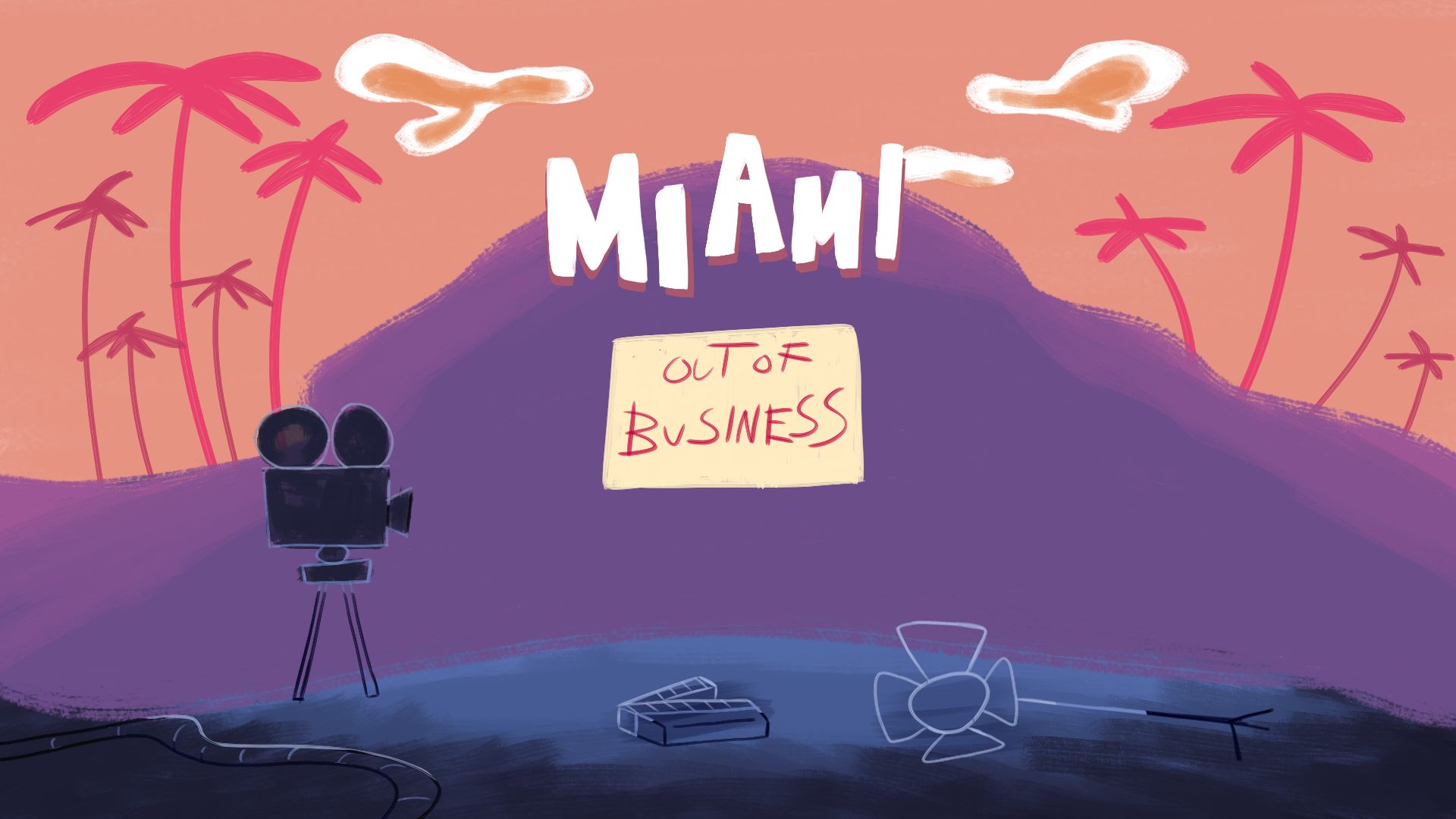
Lights, Camera, Gone: The Downfall of Miami’s Film Industry
Miami, one of the top cities in the nation, boasts world-famous beaches and endless blue skies.
As such, many expect it to be a hotspot for making films, capturing the energy that radiates from its skyscrapers and mural-filled streets.
The truth is, there was a time when creatives and industry leaders wanted a slice of this vice-filled heaven we call Miami.
It served as a neon-lit backdrop for many iconic films and TV shows—Miami Vice and the Bad Boys films are examples of attempts to capitalize on Miami’s energy.
However, in recent years, creating a large-scale film in the city has become increasingly challenging.
High production costs, the lack of state tax incentives and competition from other major cities like Atlanta have all contributed to what many see as the downfall of filmmaking in Miami.
The city’s transformation into what it currently is today began in the 1980s—a time when murder rates and the drug trade dominated headlines.
Anthony Yerkovich, the creator of what would become one of the city’s defining pieces of iconography, saw potential in the chaos.
He decided that Miami would make a perfect backdrop for NBC’s new pilot, a two-hour special named Miami Vice. It debuted on Sept. 16, 1984, culminating in a neon-lit drama that became the biggest show on television.
What officials feared would damage the city’s reputation turned into what WLRN called “a 47-
minute commercial for the city,” transforming Miami’s image into a pastel paradise.
Miami Vice was a major production, filming almost entirely on location—something very few shows “set in Miami” can claim.
Recently, Bad Monkey, an Apple TV+ original series, filmed its first season in South Florida. The show drew strong numbers and was renewed for a second season, making it seem like a lifeline for the struggling industry in Miami.
That changed when Variety reported on Dec. 18, 2024, that the California Film Commission awarded Bad Monkeys a $20 million tax credit. That ensured the series would change locations for its next season.
Bad Monkey is a reminder that while Miami still has the look and feel of a cinematic dream, California and other regions are a step ahead. Other states across the country are fighting for a piece of the pie.
According to AP News, Georgia is providing more than $1.3 billion in tax cuts for moviemaking.
California also expanded its incentives from $350 million to $750 million a year.
These states clearly see something: film is not a national industry—it’s a global one. Meanwhile, Florida does not even have a state incentive program.
Miami-based filmmaker Billy Corben, best known for directing documentaries such as Cocaine Cowboys, The U and Dawg Fight, is blunt about the state of Miami’s film industry.
“The end of the incentives marked the end of the film industry,” Corben said. “Those productions are never coming back.”
When asked why he stays while so many filmmakers leave the 305, Corben gave a simple answer: “It’s home.”