

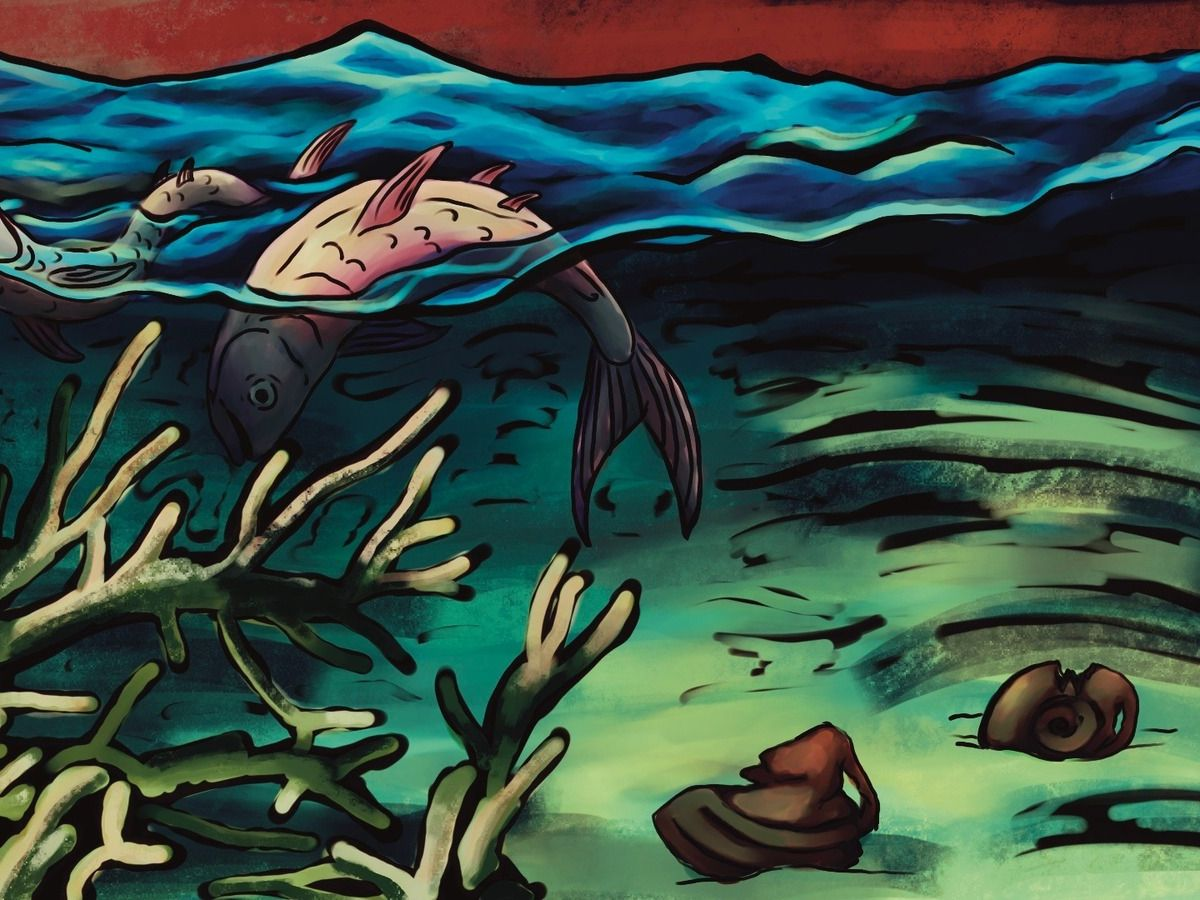
On the shores of the Florida Keys, more than 97% of coral reefs are either dead or dying.
Global warming is the root of many environmental issues. But this phenomenon is caused by something you have probably never heard of: ocean acidification.
That is a process where the sea becomes increasingly acidic by absorbing excess carbon dioxide (CO2) humans release into the air.
In simpler terms, the ocean is being turned into the world’s largest vat of acid.
Despite being a significant environmental issue, ocean acidification is generally underreported or unheard of due to the fact that humans as land animals do not feel its effect. At least, not yet.
Mainly coming from coal burning, industrial production and power plants, about a quarter of human generated CO2 emissions don’t stay in the air, they are absorbed by the sea.
Though the ocean acts as a natural carbon sink, its capacity has limitations. When it becomes saturated, the carbon remains in the atmosphere, accelerating climate change and ecological collapse.
The Smithsonian Museum of Natural History found that since the beginning of the industrial era, the ocean has absorbed some 525 billion tons of CO2, that’s 22 million tons per day. When carbon dioxide dissolves into water, it makes said water more acidic, and the oceans pH level drops.
According to the National Oceanic and Atmospheric Administration, the ocean is 30% more acidic than it was in preindustrial levels.
The majority of ocean acidification today is caused by a select group of large corporations. According to a peer reviewed study by the scientific journal Environmental Research Letters, 88 companies alone have contributed to about 50% of the decline in surface ocean pH.
This is already having disastrous effects on Earth’s marine life.
Marine organisms—such as corals, oysters, clams, mussels, and snails—that have shells and skeletons are made out of calcium carbonate. As the sea becomes more acidic and corrosive, their shells and skeletons will begin to dissolve, and there will be less proteins in the water for them to feed from.
That affects the food chain, as larger fish feed from these creatures and fish are for marine mammals and sea birds and ultimately, millions of people who depend on seafood as their primary source for nutrition and market.
In Florida, the erosion of reefs in the Florida Keys can also significantly affect beachfront communities as they act as a buffer for the underwater shock of tropical storms and hurricanes. They are a natural barrier that protects us.
What can you do?
Spread the word about ocean acidification. Nothing can be done if nobody is aware of the problem in the first place.
Simply changing small habits can make a difference. Turning off unused electronics, adjusting your thermostat to use less heating and cooling and opting to walk or use public transportation instead of driving your car can help by reducing individual emissions which add up.