Eddington Makes Us Reflect On 2020
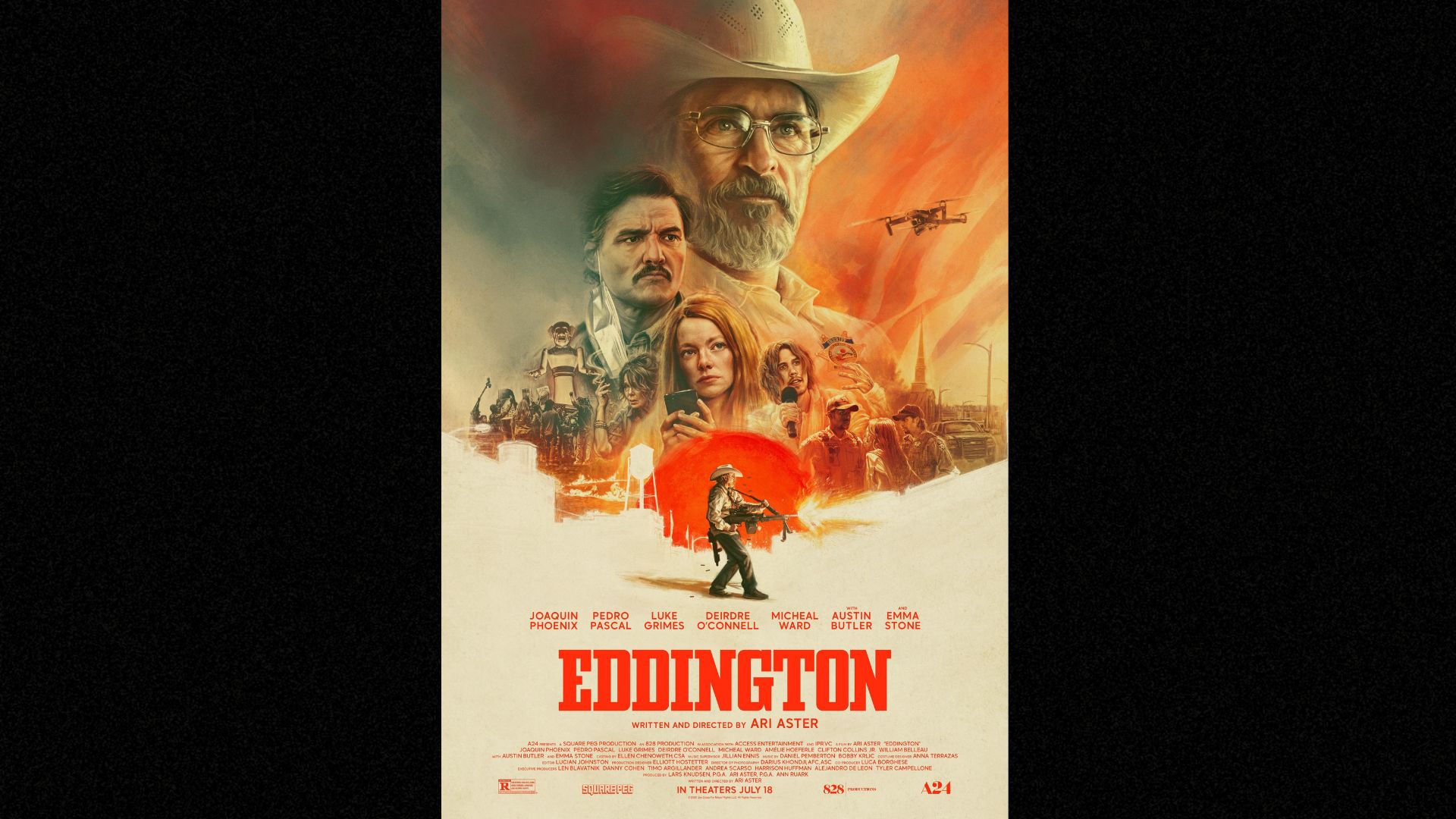
A24 Films released Eddington, directed by Ari Aster on July 18. Aster, who is best known for movies such as Midsommar and Hereditary, deviates from his typical psychological horrors with his latest flick.
The film takes place in the fictional town of Eddington, New Mexico amidst the COVID-19 pandemic and the protests that followed after the murder of George Floyd.
As Mayor, Ted Garcia, played by Pedro Pascal, enforces a lockdown and mask mandate, he clashes with sheriff Joe Cross, played by Joaquin Phoenix, who dismisses the dangers of COVID-19 despite being asthmatic.
At its core, the film is about the absurdity of the year 2020. It uses the titular town to portray the extremes of that year, from pandemic paranoia, performative activism, social media obsession and political opportunism.
During the first half of the movie, the conflict lies between the mayor and sheriff. They have had issues with each other in past crises that fuel the bloody massacre at the end of the film.
The two are surrounded by characters that embody other facets of that time: activists, conspiracists, cult leaders, and people who just want a normal life.
Characters like Dawn, Joe’s mother-in-law, represent the conspiracy theorists that are convinced the pandemic was a hoax. Another is Brian, who doesn’t align with the leftist movement at first, but eventually does to impress a girl he likes.
The film sits in these hypocrisies and contradictions to convey a major critique of our society: that truth and justice are drowned out by opportunism. The same forces that mobilize people for noble causes can be co-opted for clout, manipulation or self-preservation.
Social media also plays a major role in the film. Most of the turning points are filmed, mediated or happen through social media.
The conflict between Ted and Joe and the death of the last antifa member toward the end of the film happens after the characters get their information from social media.
Recording also works as a motif throughout the film. Aster uses recording to hold characters accountable or contradict them. This becomes a critique for the growing dependency to capture life through phones.
Toward the end of the film, the sheriff is caught in a shootout with antifa militants. He is saved when Erik—who is Brian’s friend—shoots the last militant and records the killing with his phone.
The film’s last twenty minutes is a fight between antifa members and sheriff Joe. It ends when Joe is stabbed by an antifa member. He survives, but is stuck in a vegetative state. The film takes a bright turn when it features visuals of Joe being celebrated as mayor while under the care of his mother-in-law in a new home.
That is in complete contrast to how the film starts. It used dismal imagery to portray a desolate town living through a pandemic. The dark comedy is not that easy to swallow but it depicts one of the greatest crises that humanity has overcome.
For many, it hits too close to home and makes you wonder if it’s too soon to make a film about the pandemic.
In the end, Eddington offers deep and generally centrist commentary on the events of the pandemic. And much like 2020, it leaves you with a gut-twisting realization that we’re still carrying the weight of days we thought we’d already survived.