
Hinduism’s Journey As The World’s Oldest Way Of Living
Growing up in the United States, I always felt a deep disconnect from my culture.
Surrounded by few who shared my beliefs and traditions, I struggled to understand my heritage. But, everything changed when I was 15 and I spent a year with my family in our hometown in India.
A transformative moment was visiting the temple of Sri Venkateswara Swamy in Tirumala Tirupathi.
Standing before Lord Balaji’ statue and looking into his eyes, I experienced a profound moment of realization. In that sacred instant, I discovered the spirituality within me.
When I returned to Miami, I changed my lifestyle completely, leaned more toward my faith and became more involved.
Learning about Hinduism, one of the oldest religions on Earth, made me realize a different and more meaningful way of life exists.
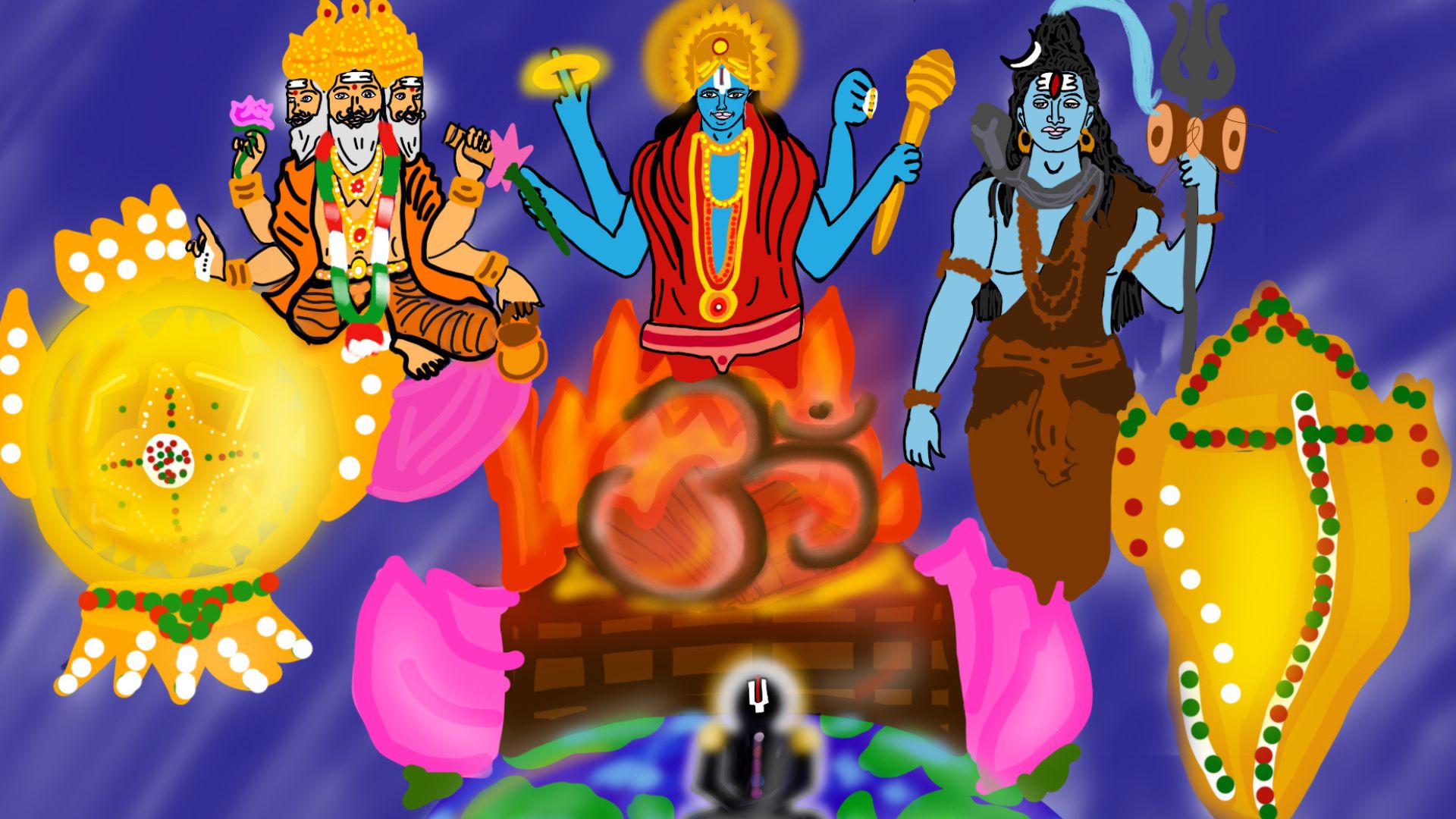
Hinduism teaches that the divine is manifested in three fundamental features: Brahma the creator, Vishnu the preserver, and Shiva the destroyer. These forces guide us through life.
The religion is guided by Bhagavad Gita—-a scripture on the ways of life, emphasizing finding happiness within, realizing the nature of soul, and acting selflessly as an offering to the divine. We consider this book the source of everything.
Living a life of purpose and inner peace by harmonizing with Dharma—one’s duty—without expecting results is the ideal way, practicing inner peace and aligning the mind and soul.
Rituals in Hinduism are not just to honor our gods; they are a path to a better life. They are about finding purpose away from the six unnecessary desires of every human being—-pleasure, anger, infatuation, greed, ego and jealousy.
By conscientiously releasing them, we can live in harmony.
Hinduism’s ethical code emphasizes the importance of moral values such as honesty, kindness, love and peace.
This spiritual journey is guided by principles and the pursuit of knowledge and spiritual discipline.
The way of life in Sanskrit—-the ancient Indo-European language of India—-is called Sanatana Dharma, which means the eternal duty to a righteous path.
Strengthening my spiritual bond has changed my life for the better. I have learned lessons that guided me through hardship and found my true self.
I have seen this influence extend to those close to me as well.
A friend who practices Jainism—-a separate Indian religion that differs in many aspects to Hinduism—was deeply impacted by Hindu teachings at a time of hopelessness and anger.
The Bhagavad Gita helped her find a way to heal and received ‘Seva’ —a selfless offering given at our temple to all people. Today, she swears she will continue this spiritual journey.
At the same time, older generations who are more traditional, such as my father, who is a priest, are concerned with the younger generation’s cultural detachment.
He believes that nowadays feelings such as anger and impatience are impacting people in a bad way which ruins their health. Everyday, he advocates to bring awareness to this issue.
There is a lot of misunderstanding about my beliefs and culture, rooted in the fact that it is different from others.
A lack of understanding often leads to wrongful assumptions and assumptions lead to division. That is why we should all make our best attempt at understanding other religions and respecting their beliefs.
Hinduism is a diverse religion that emphasizes values like karma, dharma, and spiritual growth. To me it is more than a religion—it is a way of life. It guides my actions and how I strive to live.
