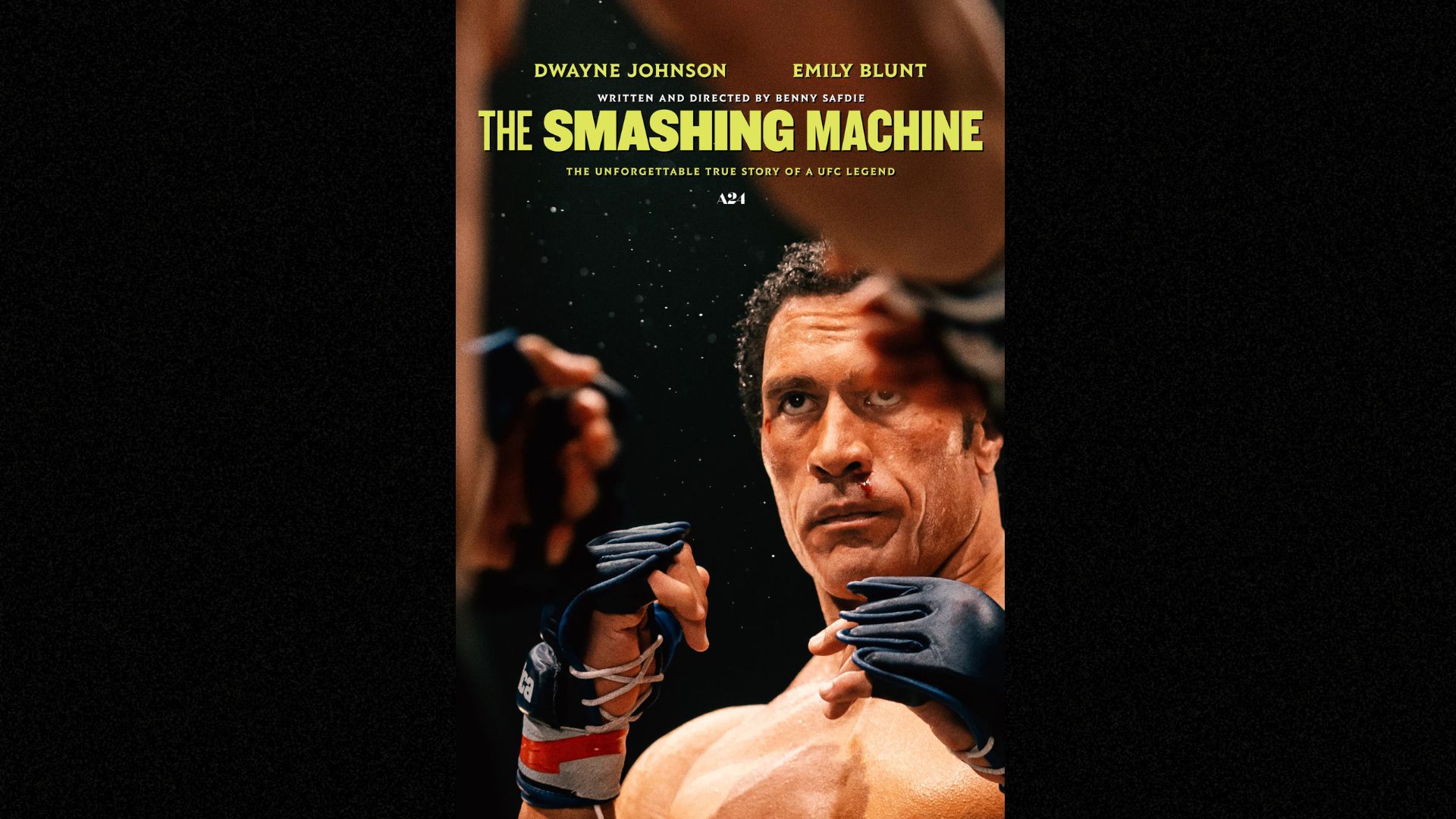
The Smashing Machine Shows The Dark Side Of Combat Sports
For almost twenty years, the Safdie brothers built their reputation in Hollywood by co-directing acclaimed films such as Uncut Gems and Good Time.
Now Benny Safdie is celebrating his solo directorial debut with The Smashing Machine—a psychological drama that reimagines the career of mixed martial artist Mark Kerr. It was released on Oct. 3.
The film begins with a voiceover from the fighter—portrayed by Dwayne Johnson—who is about to debut in the Ultimate Fighting Championship. He gives a monologue about the ‘high’ of glory, explaining that winning is the best and most addictive feeling.
That introduces a major theme in the film: what happens when you become a prisoner of that high, and most importantly, what happens when you can’t replicate it?
The Smashing Machine has a “rise-fall-redemption” plot that other sports dramas like Southpaw or Rocky III follow. The first story arc of the film ends with Kerr receiving his first loss.
He is beaten by MMA fighter Igor Vovchanchyn—played by UFC heavyweight champion Oleksandr Usyk—who lands illegal knee strikes against him during Japan’s PRIDE FC event.
Kerr, a man who has shown nothing but strength and confidence, breaks down completely. This is where audiences are introduced to Kerr’s greatest rival: opioid addiction.
In the 90s, MMA had little to no restrictions, and many of the modern procedures to ensure fairness and prioritize the wellbeing of fighters had not yet been introduced. That made the sport controversial.
Kerr took advantage of this and abused painkillers to improve his performance.
The film is Johnson’s most vulnerable performance to date. Critics have said that it’s a nice surprise to see the former wrestling star in a movie with so much emotional depth.
Kerr’s physicality when he loses control is an allegory to his emotional suppression. When he wins, his ego takes him to the clouds. When he loses, he cries quietly. This is a radical difference from the action-star personas that Johnson typically portrays.
The movie is a rebirth for the 53-year-old’s acting career and a strong beginning for Safdie as a solo director, who is willing to find beauty in the broken.
In his cinematography, Safdie uses washed-out and handheld camerawork similar to a documentary, evoking intimate sensation. Intense scenes are created using a camera shake technique and zoom, while other scenes are shot from an unusual paparazzi-like angle.
Additionally, the director critiques fighting institutions and the exploitative nature of the sport through the film’s writing.
Leagues like PRIDE and UFC commodify suffering for audiences, and ignore large issues like fighter health and fair pay. Kerr’s opioid addiction is a symptom of the lack of regulation in the industry.
Beyond being a film about fighting, The Smashing Machine is a story about relationships. Throughout the movie, Mark and his wife Dawn, who is played by Emily Blunt, have a toxic dynamic that sporadically changes gears.
They argue often and separate from each other, but manage to stay endlessly devoted to each other in the end.
The film concludes with Kerr losing another fight, but instead of collapsing, he laughs it off in a cold shower, seemingly free from his carnal desires.
The Smashing Machine is a movie that discusses masculinity, addiction and exploitation. It is a dissection of what happens when a person becomes the product of the violence they perform.